Skip to content
Named Best Museum 2022 by Miami New Times

My memories of Miami begin 34 years ago in 1980 when I came here for the first time for a nursing internship at Cedars of Lebanon Hospital. I had completed three years of nursing school at the University of Pittsburgh and came to Miami with a classmate for the summer. We lived in what was called the Cedar’s North Tower in the Civic Center. There were other nursing students from all over the country and we bonded very well. Of course, Cedars hoped to recruit us after graduation as there was a nursing shortage at that time. Our first weekend in Miami unfortunately was interrupted by the McDuffie riots. We all called our parents to reassure them that we were safe in spite of having swat team officers on the roof of our building as we watched parts of the city on fire.

I met my future mother-in-law during my first week on the job. She was a nurse at Cedars and upon meeting me she replied, “Have I got a son for you!” Our first date was to see the movie “Dressed to Kill” with Angie Dickenson and Michael Caine at the Omni theatre. By the second date, it was true love.

At the end of the summer, I returned to Pitt to complete my final two semesters of my nursing degree before moving permanently to Miami after graduation. I took my nursing boards at the Miami Expo on Milam Dairy Road and began working at Cedars. I lived again temporarily in the Cedars North Tower where my husband proposed to me on the rooftop overlooking my new city. We were married in November of 1981 and we bought our first townhouse in West Kendall when the home loan interest rates were greater than 15%.

My husband grew up near 8th Street and 71st Avenue and so he introduced me to Gold Star Deli, Sarrusi’s, Pumpernik’s, Arbetter’s and the Blue Grotto. We explored the Keys, Marco Island, and his family’s favorite destination: Sanibel Island. We bowled at Bird Bowl on a league, and shrimped off the bridges of the Rickenbacker Causeway.

We had two daughters who spent lots of time at the new Dave and Mary Alper Jewish Community Center in after-school care and summer camp. My husband and I took ballroom dancing and salsa classes at Miami-Dade College in Kendall. We picked strawberries and tomatoes in a field where Town and Country is now. Some of our favorite family activities included strawberry milkshakes at Burr’s when visiting Monkey Jungle, nighttime bike trips at Shark Valley when there was a full moon, kayaking at nine-mile pond in Everglades National Park, snorkeling at Pennekamp Park, and swimming at Venetian Pool.

In August of 1992, we were on vacation with our children in West Virginia when Hurricane Andrew struck. We had people check on our home and found out it was uninhabitable. My daughters and I stayed up north for another week and when the airport opened my husband flew back to Miami with a brand-new chain saw as his carry on. How times have changed. He knew what a useful commodity it would be with all the downed trees reported to us by the neighbors. As he drove from the airport to survey the damage, he found it difficult to find the house without the usual landmarks. Luckily our neighbors were willing to take us all in until our house was ready to move back into in mid December.

During the next several years we got the house and yard back into shape. My husband, who has a degree in horticulture, restored our yard with lots of fruit trees including grapefruit, orange, lemon, lime, and tangelo trees and other native plants. However, in 1999, a citrus canker outbreak occurred putting all of the state’s citrus trees at risk and so an eradication program was enacted. One day after work we came home to find all of our beloved citrus trees cut down and in the swale of our house. After a few days of moping, we decided to make the most of our now barren yard by putting in a swimming pool. This was the best investment for our family because we have spent many hours of quality time together trying to stay cool during the hot summer months.

I feel so fortunate to have had the experience of living in this multi-cultural city where I learned to love churros and hot chocolate, pan con lechón, chicharrones, and becoming bilingual while working in an ambulatory center on Calle Ocho. My husband and I have a pool surrounded by mamey, lychee, dragon fruit, mangoes, atemoya and papaya. We continue to find new activities in Miami to enjoy, for example the South Dade Cultural Center, Cosford Cinema, the Tower Theater with Azucar ice cream across the street, O Cinema, and Schnebly winery where our daughter was married. I love living here in Miami and am so grateful to my mother-in-law for giving me a reason to come back permanently.

It is unfortunate that nostalgia comes later in life. Having it when memories are fresh might make one more appreciative of what is being lived. I speak of this because of a recent incident that sparked my memories of growing up in the late 1950s through the 1960s in Dade County, on a street just a little north of Perrine and just a little south of South Miami.

My street was an unpaved cul-de-sac that began at U.S. 1 and ran for a couple of blocks. Across the street from my house was a Florida pine forest, though it did not match the forest I would read about in the books I was given in Perrine Elementary school. In those books, leaves fell in the fall and everyone in town would bury potatoes to be roasted with the leaves as they were burned. It sounded like fun to me and it was hard for me to understand why I was not experiencing it in Miami.

The books mentioned snow as well. The good teachers at my school helped give all of us students an idea of what snow was like by having us cut snowflakes out of paper. It was only much later in life that I discovered that our paper models and the real thing in no way matched.

My yard was enormous, or so I remember. It was filled with monarch butterflies, dragon flies, and frogs. Once a year, our yard, the woods, and almost all side streets filled with land crabs. On Old Cutler Road it was not odd to see people collecting them nor was it was unusual see cars with flats caused by them.

The house I lived in was small but made slightly bigger by my father who was very skilled with his hands — something I apparently did not inherit.

A bit north on U.S. 1 there was the Dixie drive-in movie theater, a popular hangout for high school students. Somewhere not far from there was the Miami Serpentarium, a local tourist landmark that was marked by a giant snake statute.

And then there was Harry.

Harry Troeger lived in a small home a few houses down from mine. He designed and built the house. It had no electricity. I suspect he had a well but I do not know for certain. He seemed like a strange man who lived in the small wood and coral house he built. It was almost hidden by trees. For me, my sisters and the other children who lived on the street or the next street over, he was a mystery.

Once a year on Halloween, most of us were brave enough to approach the small house and peek in the windows. We ran like the blazes when we heard a noise. We all assumed the house was haunted.

Harry Troeger, who died in 2008 at the age of 92, was Miami’s Henry Thoreau: a unique man who lived an unusually solitary life in what was, back then, the sticks. Harry was a pioneer.

As a small child I was too timid to say little more than hi when he walked by, heading (I was told) to his job at a movie theater.

Recently, I read in the Miami Herald that his house had been sold to a contractor because of unpaid taxes. The taxes had lapsed in large part because the county was forwarding the bill to an old out-of-date address where Harry lived in the late 1940s.

The article indicated that the house was in danger of being torn down. There was hope, however: it came in the form of a small band of merry Don Quixote types led by Amy Creekmur. The “Friends of Harry” (aka the FOH) were scrambling to make an offer to purchase and save the property.

The lady’s name was familiar. By chance, several weeks earlier, out of curiosity, I checked county records to see who was recorded as the owner of my childhood home. Amy Creekmur had purchased the house I grew up in.

But neither Amy nor the troops that made up FOH were able to move fast enough to save Harry Troeger’s house. His house was brought down. The coral stones he had used for the construction were moved. The wood discarded. A unique part of our local history lost.

It is not reasonable or expected that every old house or historic building be saved. And it is understood that there are many who would save none. To them, the properties are old buildings with no value.

But I believe most of us seek to save some links from our past. Harry Troeger’s house once had historical designation but the agency that granted the status took it away. For me, it is hard to believe that there was a more worthy candidate for continued preservation. Harry Troeger’s house was one of our most vivid links to our past.

I can close my eyes and relive how Dade County was years ago. Sadly losing Harry Troeger’s house takes that ability away from others.

Addendum from the Miami Herald

Troeger built the cabin, which was loosely divided into a wash room, bedroom and reading room, by hand out of coral rock and Dade County pine in 1949. Troeger, who made the cabin his home for nearly 60 years, lived a simple life: no electricity, no car, no running water, only a pump he built himself. The cabin walls were lined with books about Buddhism and works by Emerson.

In 1998, the county deemed the home “unsafe” and threatened to tear it down. When friends and neighbors rallied, the county designated the home as historic and Troeger was allowed to live out his life in his home. In 2008, he died in his bed at age 92.

The U.S. Coast Guard does more than search for rafts, drugs, and errant boaters in this area. “Coasties” saved 70 merchant mariners during a blizzard off Massachusetts in 1952. It was called the “two-tanker disaster,” and this Miamian was aboard one of the Coast Guard vessels involved in the rescue of two storm-savaged ships.

I grew up on Miami Beach, and always admired those sleek Coast Guard cutters that were moored off Biscayne Bay’s islands. Who would have dreamed that some day I would be a seaman aboard a cutter involved in the T2 tanker rescue? It is still listed as one of the Coast Guard’s 10 most significant rescues.

During my summer vacations from the University of Florida, I bell-hopped at the Sands, Royal Palm, and White House hotels. My favorite bartender worked at the White House — my dad, Philip Morris. The oceanfront lounge had the greatest view of any beach hospitality venue.

Who would have known that I would meet my future wife in the nearby Club Deuce? Diane drove down from Detroit to get away from another cold, slushy Michigan spring. Two gal friends introduced her to the Deuce, now the oldest bar in Miami.

A fairly new CG cutter is moored at Port Miami. This 154-foot fast-response cutter is named the Bernard C. Webber, after a true American hero. Bernie rescued 32 stricken mariners from the tanker which had cracked in half from the fury of this unnamed storm a few miles east of Chatham, Massachusetts.

Bernie was the coxswain (skipper) of a motor lifeboat, out of Chatham
Light Station. It was 36 feet long, and had a capacity of 12 people, including a crew of three.

During the blizzard, and despite 50-foot waves, Bernie managed to cram 32 merchant seamen into his windshield-smashed boat. A 350 lb. sailor didn’t make it as he leaped from the S.S. Pendleton stern.

Cutters are named after enlisted heroes. Bernie denied that he was a hero all his life. He refused the CG gold lifesaving medal, unless his crew of three received gold also, instead of silver.

A sister ship, S.S. Fort Mercer also cracked in half, just forty miles away from the S.S. Pendleton. I was a deck-hand aboard the CGC Acushnet, which rescued 17 sailors off the foundering Mercer stern.

After a night of plowing through 60-foot seas, the CGC Acushnet arrived at the S.S. Fort Mercer’s stern section, just south of Nantucket Island. The icebreaker Eastwind was attempting to rescue three panicked sailors by pulling them over to safety in rubber rafts. One survivor had nearly drowned in the process.

Finally, our captain, John M. Joseph, had seen enough. He got permission to drift alongside the stern and convince the survivors to leap to our fantail. Capt. Joseph maneuvered the Acushnet parallel to the stern, and when we were close enough, three feet, seven distressed sailors leaped to our waiting arms. Then, rogue swells suddenly
swept us together and the vessels collided at taffrail height. CLUNK, KNEEL, HUG THE DECK!

We made a full circle and returned to rescue 11 more mariners from the tottering hulk. One hefty mariner slipped on our railing, but was snatched from the freezing water by our two bosun mates. [The word is boatswain, but the common term uses the pronunciation and spelling “bosun,” so I’ll let the Herald folks make that determination.] He explained that he wore his new shoes to make the leap. Another mariner landed on our fantail wearing two suits and two overcoats. In the chaos, he had neglected to grab a shirt.

I was third in the catch-and-hold rescue line, and was escorting a successful jumper to the pharmacist mate’s cubbyhole for his shot of brandy. “Hey, Doc!” I yelled. “How about me? I’m just as wet and cold as he is.” Doc replied, “Get this guy a shirt, and we’ll think about it.” He didn’t and neither did I, with my innards doing flip-flops.

Another merchant seaman told me, “That was the greatest demonstration of seamanship I have ever seen. It was also the worst storm I have been through in 20 years at sea.” Dented, but not beaten, or cracked, the “Mighty A” then headed northwest to drop the survivors at the Boston base.

Tally of the tragedy: 14 lost at sea, 57 rescued from foundering vessels.

To me, it was the most harrowing and exciting three days of my life.

Decades later, the CGC Acushnet was stationed in Miami. She was one of 24 cutters which helped ferry 125,000 downtrodden refugees from Cuba to Florida in the Mariel Boat Lift. In case you forgot, that historical event occurred from April to October of 1980. In three years, I got to see a panorama of America: Portland, Maine; Boston; Baltimore; San Juan; Guantanamo; and finally, the 180-foot buoy-tender CGC Bramble, in Miami Beach. This was before the Coast Guard base was built on Watson Island, so we were moored alongside Alton Road, just south of Fifth Street.

Glad to be back in Miami, but it took me months before I would go fishing with friends in their tiny 24-foot skiff.

I was born in Louisville, Kentucky in January 1944, what you would call a war baby.

My mother and father were both born in Louisville and attended school in Louisville. They met at the old Anchorage High School and were married in 1941.

My father became a pilot in the Army Air Force in late 1942 and was serving in England late 1943 and early 1944. His plane was shot down over Germany on April 1, 1944 and none of the crew made it through the crash and burn.

My mother bought a car and a trailer from my grandfather, a Chevrolet dealer, and then headed south. Mother, my grandmother, and I made it to Tampa, Florida, after driving through Alabama in the dead of winter.

She was told one of the best parks was on the east coast at Briny Breezes, and after checking out the park, she decided to take us and the trailer there. Just outside of the park was the Jungle Inn Bar, a favorite hangout for singles in those days. My stepfather, his brother, and uncle were working on construction of new homes in the Boynton-Delray Beach area. My mother, a lonely war widow, and my stepfather, lonely war vet, met each other at the Jungle Inn and six weeks later wedding bells were ringing at the Lutheran Church in Delray.

They lived in the park for about six months after this and ended up renting a home in downtown Boynton Beach. Within a year, they purchased a home in Delray Beach and moved just before the 1947 hurricane. They constructed a small, two-bedroom cottage on the rear of this property and would rent out the house to winter visitors and live in the cottage.

My stepfather remained in the construction business until 1957 when he suffered several strokes on Easter Sunday, ending his home construction business. At one point, he worked with an investor, constructing several homes in Boynton Beach. My father had to make many trips to Miami to see the investor while the development of this street was taking place.

Over the years, we made many trips to Miami to attend some of the attractions such as the zoo and the Jungle Gardens. After my father’s strokes, he went to work for a company in Boca Raton that did business all over the United States.

They would have an annual picnic at Crandon Park in Miami. Several times when my parents had to fly out of town for a special vacation, they would leave from the old Miami International Airport.

I attended school at Delray Lutheran Elementary School, then, I was part of the first sixth grade class at Plumrose Elementary School in Delray, Boynton Beach Junior High, Seacrest High School, and, I finished high school at Kentucky Military Institute in Lyndon, Kentucky, which had winter headquarters in Venice, Florida. I finished school at Palm Beach Junior College in Lake Worth.

My wife and I met at the First Baptist Church in Delray Beach Florida, and in 1965 were married at First Baptist. We left Boynton in September, 1965, and moved to Louisville unfortunately, our moving van did not make it that far.

Somehow it went off a mountain in Tennessee and that was the last we saw of most of our possessions and wedding gifts. We had moved to Louisville, because I was going to work for my father’s family business. The Eline Realty Company has been in business, either selling homes, building homes, or selling Chevrolets, since 1913.

I will always have a fondness in my heart for South Florida and the twenty years I spent growing up there. My wife and I still enjoy coming to the Panhandle every spring for rest and relaxation. The place we go to has only one fast-food restaurant in the whole county.

The east coast has gotten somewhat overcrowded with people, roads, and buildings the last 30 years, but that is progress.

Little did we know when Ben and I got married in Havana in 1958 and came to Miami for our honeymoon that this city would be our home for the rest of our lives.

We spent two wonderful weeks in Miami Beach in a hotel named “Sands,” and visited all the tourist attractions, such as Vizcaya, the Seaquarium, Coral Castle, the Boom Boom Room at the Fontainebleau Hotel, Eden Roc, Castaways and so on. Miami was a sleepy town where all restaurants closed before 10 o’clock. However, there was night life on Miami Beach.

We came back to our peaceful lives in Cuba, but on December 31, 1958, the communist government took over.

Every day we were waiting for something to happen that would end that horrible nightmare. We could not comprehend how the American government would allow a communist regime with Russian missiles, 90 miles away.

In 1963, the American Red Cross put together a fleet of several cargo ships to transport the Bay of Pigs prisoners and their families to the United States. At this point, we decided to leave our country. We had to abandon all possessions and leave everything behind. It was heartbreaking. We came in the berths of a ship named American Surveyor, and because we both were fluent in English, we were selected to be the ship’s translators.

We were given one cot for every two people, but I was bringing a 9-month-old baby girl to her parents in Miami, so she got our cot. My parents, Mariano Cordova and Dulce Maria Tascon, and my brother-in-law, Daniel, also came with us in this ship. We brought our dog, Canela, as well. We encountered extremely rough weather and as a result, the trip, which normally would have taken 12 hours, lasted 20. Parents with babies were bringing them in shoe boxes (for lack of cribs). It was really horrific.

We finally arrived at Port Everglades on April 29, 1963, all disheveled and dirty from the ship furnaces. We were transported on buses to the old Opa-locka airport where our relatives and friends were waiting for us. I gave the baby to her parents and never heard from them again. She must be 51 years old by now. I have always wondered what became of her — did she marry, and does she have any children? Has she ever been told how she came from Cuba and who brought her?

Because Ben’s relatives were living in Miami Beach, we started our life there and rented a one-bedroom apartment on Ocean Drive in the “Ocean Front Apartments.” It belonged to two older brothers and a sister who were marvelous with us refugees. They learned to speak Spanish and played dominoes with us. It was like a big family.

I remember the two movie theaters, the Cameo and the Cinema, which showed movies for 25 cents before 6 o’clock, and after that it would go up to 50 cents. We ran like crazy to get to the movies before 6 p.m. We were so far behind in the movie business that any film was brand new to us.

I landed a secretarial job at the Mercantile National Bank at 420 Lincoln Road. My husband was offered a position as a teacher’s aide at Southside Elementary in downtown Miami, where all of the newly arrived Cuban children were studying. He served as an interpreter, teacher’s aide, worked at the school office, and did whatever the principal would ask him to do, such as bringing her coffee and doughnuts from the Royal Castle nearby. This school has been designated a historical landmark in downtown Miami.

We were able then to rent a two-bedroom apartment on Euclid Avenue. My brother-in-law slept on the couch and got a job at a Hialeah factory making plastic hangers. He did not own a car and had to take two buses from Miami Beach to Hialeah to get to his job on time. Later on, he bought himself a 1952 Chevrolet for $250. It felt like a Rolls Royce to him.

Our family outings were to Crandon Park for picnics or to Rickenbacker Causeway to fish. They were simple times, but very happy. We remember the small zoo at Crandon Park with lots of parrots and an old lion.

We became proud American citizens on July 4, 1970 in a swearing ceremony held at the Dade County Auditorium.

One Mother’s Day we all went to Shorty’s in Kendall to celebrate, but my mother fell ill and we took her to Mercy Hospital, where she was diagnosed with stomach cancer. She passed away two weeks later at the ripe age of 54.

We decided to leave Miami Beach and were able to buy our first home in the Coral Gate neighborhood in 1966, where a two-bedroom, one-bath would go for $15,000, with $450 down and $110 per month.

I remember that Ben only had a $10 bill in his pocket and that was what the realtor, Fred G. Smith, accepted as our initial down payment. That night, he came to our home, we gave him a check for the full down payment, signed the contract and he returned the $10 to us. I understand this area was developed in the 1950s for World War II veterans under the G.I.Bill.

My father was living with us, and he shared a bedroom with our son, George. We lived one block off Miracle Mile and our outings were confined to McCrory’s and F.W. Woolworth, and Sundays to the ponies and Burger King. I remember the park on Northwest 22nd Avenue, which belonged to the Police Benevolent Association, where all the neighborhood children went and had a fantastic time. We used to pick green peppers, tomatoes and strawberries at 117th Avenue, where Kendall is now a bustling neighborhood, and brought home bags full of freshly picked vegetables and fruits.

We decided to move to a younger neighborhood full of children and excellent nearby schools, Coral Park Estates, where we have lived for the last 40 years. George attended Coral Park Elementary, then Rockway Middle School, Miami Coral Senior High, Miami-Dade Community College and finally, FIU.

When he married Janet, they decided to buy a home in the same neighborhood so that their children would attend these schools. My granddaughter, Gia, attends Coral Park Elementary and is now in fifth grade. The cycle repeats itself!

My husband passed away three years ago and I still live in the same neighborhood. I have been in Miami for 50 years already, longer than in my own country, and have always considered this our only homeland. Over the years, we have witnessed the transformation from a sleepy town to a beautiful and vibrant city — an experience that I wouldn’t change for all the money in the world.

Being raised in St. Louis, Miami was always that exotic place I read about. I never really thought I’d be living here.

On a trip back from Central America in 1975, my partner Jim Hewitt and I landed in Miami in February. We didn’t want to face winter up north, so we found a cheap apartment on Miami Avenue and 20th Street. A noisy place that is still there, it is wedged between a busy street, a jet flight-path and a railroad track.

In 1978 Jim and I parted in New Orleans, and by 1980 I met Brenda Williams. We fell in love and were soon living together. In 1982, we moved to Miami Beach, living at the Chesterfield Hotel on South Beach.

At that time the city still required Civilian Registration cards to work on Miami Beach, a leftover from the 1930s for monitoring seasonal workers that the State Legislature overturned in 1986. So, we got ours but never had to use them. Within a month we had moved across the bay to Miami, living in the Edgewater neighborhood off Biscayne Blvd. at 23rd Street. It was an old neighborhood with a few new multi-storied apartment buildings, but mostly old residences subdivided into apartments like the one in which we lived.

Brenda’s 15-year-old daughter Rosalyn moved down here with us and went one year to Robert E. Lee Jr. High School at 3100 NW 5th Avenue. We then enrolled Rosalyn in Miami Beach High. Normally, from where we lived she would have gone to Jackson High School on 36th Street in Allapattah, but we were leery of an inner city school in that neighborhood, so because of desegregation policy and her being black, we were able to enroll her in Beach High.

Beach High is where she met a local boy, Keith Lankford, whom she eventually married and with whom she had our two grandsons, Keith Jr. and Kevin.

Our neighborhood in those days was a pleasant place to live. One of our family traditions was to walk down the Boulevard to the Omni Mall. At the time, it was a thriving mall with Burdines and Penney’s anchors and full of eating and shopping places and even a movie theater. Our Friday destination was for pizza at Cozzoli’s, then just hang out walking the mall or take in a movie.

In 1983, Brenda and I got married at Unity on The Bay in Miami, a couple blocks from our home. Having lived together for three years it was a small wedding celebrating our life together with just the Church Notary officiating, Rosalyn and two friends as witnesses.

Brenda and I were living on Miami Beach in 1996 when we got divorced. It was amicable and we remained friends. Brenda later became ill and was diagnosed with ALS. She stayed with Rosalyn’s family in West Park until she died in August 2000 and where I visited her often. I am still a part of Rosalyn’s family and did extensive travels with my youngest grandson Kevin when he was a teenager.

I am still here, living on Miami Beach and working for the past decade at MACtown a residential facility for developmentally disabled adults in Little Haiti (Little River) Miami.
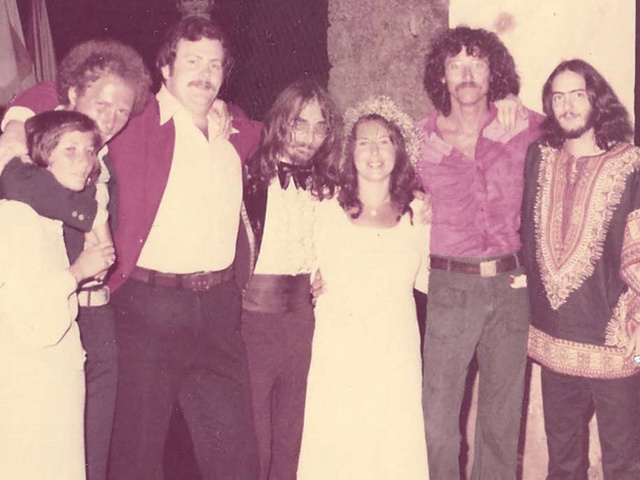
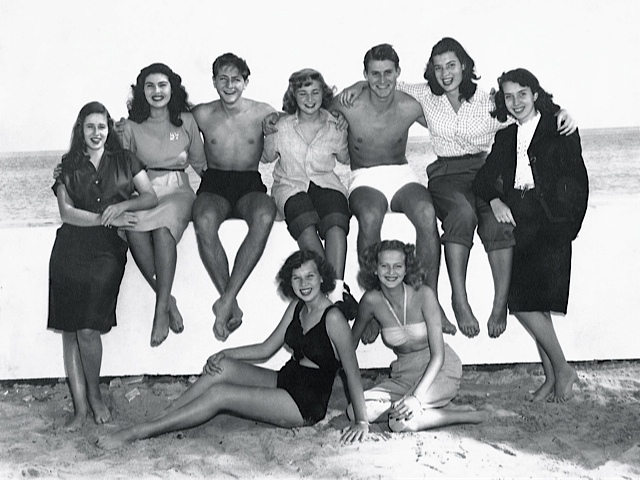
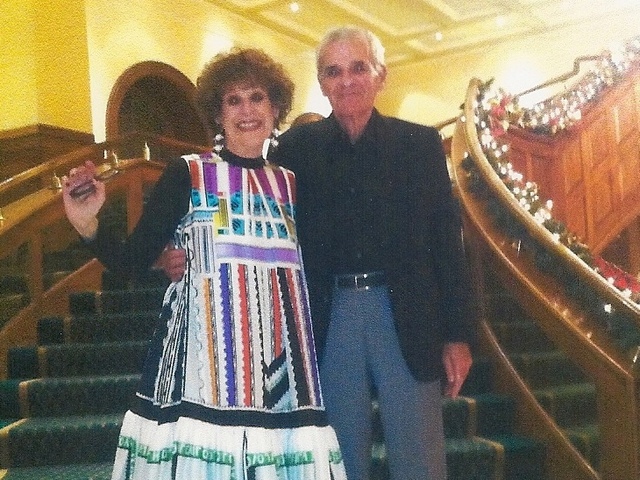
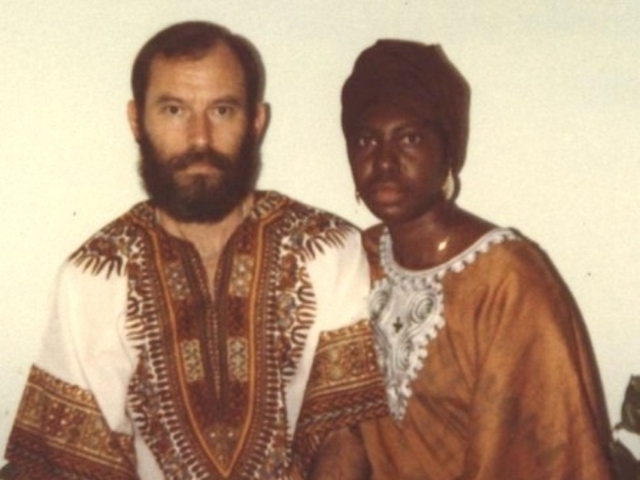
My father George Alberts was a reserve officer in the United States Air Force. When he was called to active duty during World War II in 1943, some of his basic training took place on Miami Beach. This was to have a huge influence on the Alberts family 10 years later.

I was born in Worcester, Massachusetts in 1946, and my family lived there during the first 5 years of my life. In 1951, my father, who was an Air Force navigator, got called up again because his services were required to navigate military aircraft between Tokyo and Seoul. When it became apparent that the fighting would be prolonged, he was allowed to send for his family, and we lived in Tokyo for a year and a half.

He was discharged from active duty in 1953 and we then moved to Wisconsin. My mother did not like the cold Wisconsin winters, so my father, recalling the beauty of Miami Beach, decided to take the family to live in Miami. He rented a two-bedroom apartment near the University of Miami where he finally managed to complete his college education that had been interrupted twice by war. He graduated with a degree in business administration in 1955.

Miami was a much different place in the mid-1950s. I can recall going to a food market in South Miami in 1954 with my mother and sister Maureen, and hearing my sister complain to my mother that the drinking fountain in the back of the store labeled “colored” was out of colored water! Fortunately, that sort of overt racial discrimination stopped by the end of the decade.

In 1955, my father started his business known as Alberts Advertising. Dad also purchased a new home on Southwest 18th Terrace and 82nd Avenue. Back then, the area that is now known as Westchester was so rural that I can recall seeing hunters with shotguns bird hunting across the street from our house.

Many of my fond memories from the early 1960s are of things that happened at the former Westbrook Country Club, which was located on the southeast corner of Southwest 87th Avenue and Eight Street. This club was very popular during the summer because it had an Olympic-sized swimming pool which, viewed from above, looked like a giant W. All of my friends and practically every lovely young lady I knew swam in and sunbathed around that pool. Unfortunately, the club closed in the mid 1960s. The beautiful pool, cabanas and two-story clubhouse with its formal ballroom are gone.

My mother was pretty much a stay-at-home mom. She did like to dine out frequently and in the mid 1960s she had dinner at a small restaurant on Southwest 32nd Avenue called The Studio Restaurant. She became fast friends with the owner and was hired as a hostess. She loved to tell us about people standing in line for up to two hours, sometimes literally fainting from heat and hunger.

Later on, Mom also worked as a hostess in another small restaurant that was located on Bay Harbor Islands called the Inside Restaurant. This establishment was owned by Dick Schwartz who was Meyer Lansky’s stepson. Lansky, the mob’s financier liked to dine at the Inside. He was frequently seen huddled with his associates having a quiet conversation at his favorite table in the back of the restaurant.

A few years after my mother left this job, Dick Schwartz was having drinks at the bar of the Forge Restaurant with a “made man” from the mob and they got into an argument about something. Dick drew a handgun from beneath his jacket and shot the man dead. A few weeks later, as Dick was getting out of his car parked in the lot adjacent to his restaurant, retribution came in the form of a shotgun blast that ended his life.

I received all of my education in Miami.

The first school that my sister and I attended was Sunset Elementary School. I spent my middle school, or what was then called junior high school years at West Miami Middle School. In 1962, I started 10th grade at Southwest Miami Senior High School. I wish I could say that I was an honor roll student but, unfortunately, I wasn’t wise or mature enough to take advantage of my educational opportunities.

What I did take advantage of was the fabulous social scene. Back in the early to mid-1960s, high school sororities and fraternities were very popular. There were legal (supervised by responsible adults) and illegal clubs. My passion was to socialize and party with my “brothers” in my illegal fraternity known as Eta Sigma Phi or “Eta Sig” for short. Southwest High, Gables and Palmetto all had these social clubs. Most of these fraternities had students from only one school. One of the nice things about Eta Sig was that it was comprised of students from all three schools, which helped widen the circle of my social contacts.

Most clubs followed the college tradition of using Greek letters, but others had more creative monikers. Readers who lived in southwest Miami Dade and attended high school at this time may remember some of these club names: Ching-Tang, Counts, Lynx, Decalion, Saxons, Bucks, Centurions and Tri-Sellet, to name a few.

The main purpose of these clubs was to throw parties. The instructors and administrators of the schools and local law enforcement did their best to discourage these clubs and the underage drinking that they promoted, but they remained popular until the late 1960s.

My freshman year of college was spent at Miami-Dade College, popularly known at the time as Dade Junior. In 1965, there was no South Campus so classes were taught at Palmetto High School in the evening. In 1966, I transferred to the University of Miami. My tuition for 15 credit hours of classes was $700. At my UM orientation, I recall a guide proudly showing the new students the school’s IBM 360 series computer, which was housed in a large room behind a glass wall. Can you imagine, the school only had one computer!

I majored in business administration and my time at the university was fairly uneventful except for the Vietnam War protests, which fortunately helped bring that conflict to an end several years later.

Today, Miami is a very different place with its multicultural and multiethnic population, its sprawling communities and its many beautiful buildings. Miamians have much to be proud of, but I also believe that among long-time residents there is a consensus that a relaxed, less stressful existence has been lost.

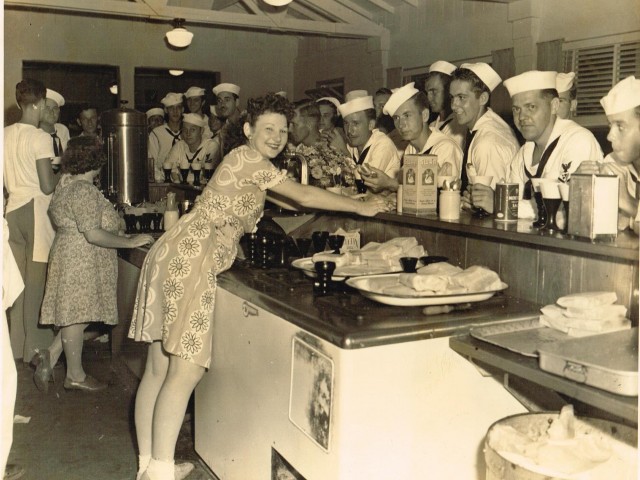
I guess my earliest memories are from the time of World War II, when I was aged 6 to 10, and all of Miami Beach was an OCS (Officer Candidate School) for the Army. Soldiers were marching in the streets, coming to our house for dinner, and training on the golf courses, where “obstacle courses” were set up.

Car headlights were painted black on top. Windshields had stickers to show the amount of gas you were allowed (according to need). Once or twice, my dad or someone drove us to the beach to watch a freighter burn that had been torpedoed by German U-Boats. On Purdy Avenue, there was a fenced-in area where they kept German POWs for a short time. I remember walking by, but don’t remember saying anything to them.

Port Elco, a marina at Dade Boulevard and Purdy Avenue, is a good place to start a tour of our neighborhood. I remember that I was at Port Elco on VJ Day (the end of the war). All the boats in the marina started blowing their horns, and everyone was shouting, “The war’s over!”

Right next to Port Elco was the bridge to Belle Isle. It made a good ramp for our home-made skate scooters (an apple box, nailed to a 2×4 with roller-skate wheels) and was a good place to fish with our drop lines, and especially good for dropping our home-made crawfish and stone crab traps. Back then, we thought that shellfish had to be cooked alive, so we just ran home with them.

The mouth of the canal, where the tide either came in or went out under the bridge, was another great fishing spot. That’s where I kept my rowboat, and later on it was a hurricane refuge for my brother Tom’s and my sailboat.

Mother Kelly’s was a nightclub on the corner of Dade and Bay roads. Mother Kelly (no relation) was a round, white haired, Russian man with three grown sons. Because I lived so close, I was adopted as their mascot. Sometimes, on Sunday morning, I would help Mother Kelly clean up the bar.

Three blocks south of Lincoln Road was the start of Flamingo Park, the biggest park on the Beach. It had red clay tennis courts (sometimes when I went to play, my sister Babe would give me her white tennis shoes to take along and scuff up to look worn), basketball courts, softball fields, a football field (my high school, St. Pat’s, played our home games here), a band stand, a professional baseball field (AAA), and two four-wall handball courts. Some of the best players in the country played here. In my late teens & early 20s, they let me play with them if they needed a fourth.

In the beginning, when we left the neighborhood, it was either by foot, thumb, bus, or jitney.

There were not enough bikes to go around. In fact, I think I had the only one for a while. It was a hand-me-down from my sisters, which I used on my paper route until I saved enough to buy a new Columbia from Western Auto. Of course, we also got rides in my mother’s car – mostly to the beach at 21st Street and Collins, but also many other interesting places, like Matheson Hammock, Tahiti Beach, Venetian Pool, Greynolds Park, and many others.

The bus system in those days was great. If my mother wasn’t taking us to the beach, we caught the “L” bus across from Mother Kelly’s to the 21st Street beach. The L bus was also our ride to downtown Miami, across Venetian Causeway, down Biscayne to Flagler, the last stop for the beach bus, and beginning for all Miami buses. At this stop was the famous “Jahn the Magic Man” hobby shop. Model trains, planes, boats – the works. At one end was a small stage where Jahn would put on magic shows.

On Saturdays, I got to work with my dad at his produce company. I’d help put up orders, and ride with the drivers. Dad and I would go to breakfast at Charlie’s Marketview Restaurant. We always sat at the same table and had two cake doughnuts.

Dad’s warehouse was on the railroad tracks and when the circus came to town, he brought me down to the station to watch them unload the animals and gear. The field where they set up was also nearby, so we got to watch them put up the “Big Top” and lay out the midway. They used elephants to help put up the tent, carry the gear, and pull up the center pole. Just as much fun as the actual circus.

When Tom came back from the Army and UF, about the time that my father died, I was 13. I gave Tom my paper-route savings (about $400) and he put up the rest, and we bought our first sailboat – a 20-foot center-board sloop with a star rig. Tom came up with an enterprise for her: advertising for Picciolo’s Restaurant. My mother sewed a sign on the boat’s sails in red letters, “TONIGHT DINE AT PICCIOLOS” on the main sail, and “DINNERS $1.25 & UP” on the jib. Mr. Picciolo paid us $100 a week (weekends and holidays). The “enterprise” ended when we turned her over in Government Cut and tore up the rig on the jetties.

After her demise, we bought a 30-foot sloop with a cabin and gas inboard. She was a “double-ender” and looked like a submarine when motoring. We named her Gypsea.

We sailed her down to Matecumbe one time for her most eventful cruise. She sunk at her mooring behind the VFW hall, when she impaled herself on a submerged piling we didn’t know was there. After that, we moved on to power.

Well, that takes us up to the ‘50s, and the days of my first car, a 1937 Ford Coupe, black, 3 speed on the floor. Cost me $35 and she ran! Needed a new transmission pretty quick, which I got at a junk yard for $18. A friend of Tom’s put it in for me, and off I went. The 50s were right out of “Happy Days,” and happy they were, but a little too wild for these pages.

I was born in Guantánamo in 1956. I moved to Havana as a teenager to study and ultimately graduated with a math degree. In 1994, I decided take a raft to the United States.

I had to leave Cuba. I had no future there.

I graduated from the University of Havana believing that if I had a good education and worked hard, I would succeed in life. But because I wasn’t integrated enough with the government, there weren’t opportunities for me. So I resorted to selling produce on the streets with my university degree in my pocket. Later, I cleaned floors at the Hotel Inglaterra.

I also wanted to leave because I valued my freedom and found that I didn’t have the freedom to express myself in Cuba.

I started plotting my escape with a plan to try to get through the border fence at the U.S. naval base in Guantánamo Bay. On Aug. 1, 1994 I went to my 1-year-old niece’s birthday party in Guantánamo. That was the last time I saw many of my family members, including my father. I couldn’t even tell most of them that I had plans to leave. But it proved too difficult to try to get passed security and onto the base.

On Aug. 5th, I returned to Havana to find the streets filled with protesters. Several days later, Fidel Castro announced that whoever wanted to leave, could go. So I got in contact with a cousin who also wanted to leave and we started working on a raft.

When it was ready, everyone in the neighborhood helped us get the raft on a truck we had rented. They wished us well, hugged us and gave us blessings. Many of the old women cried.

We drove the truck to the Brisas del Mar beach east of Havana. Even the people at the beach helped us get the raft out on the water. A neighbor of mine, who had planned on going with us, backed out at the last minute. And my cousin, who was just supposed to help us get out, ended up coming along.

We left on Aug. 30, 1994.

I was the guide on the raft. I had the compass. Before we knew it, the coast of Cuba was gone. We left in the late afternoon so we saw nightfall.

The night out on the water was one of the most impressive things I’ve ever experienced. The only light you see is the moon. We would see empty rafts out on the ocean. I later realized that those probably belonged to people who didn’t make it because when the U.S. Coast Guard rescued rafters, they would usually sink the raft.

We were out on the ocean for the entire night. Our sail didn’t work so our hands were destroyed from rowing all night. Our drinking water had been contaminated and we were too nervous to eat.

There was a point when everyone saw an image in front of us on the sea. I’m not a particularly religious man but, to me, it was an apparition of the Virgin Mary. She stood in the direction that we were supposed to be heading. She came at a time when things were getting desperate for us. Next thing we saw were helicopters.

At this point, night was falling on our second day at sea. We had been out there for a little more than 24 hours.

We were picked up by the U.S. Coast Guard and they took us to a ship that was full of people. We were in bad shape. The ship had the biggest American flag I have ever seen. For me, it was like an angel hugging us and welcoming us to the United States. It was the first time I felt safe since I left Havana’s shore. Even in Cuba I didn’t feel safe. So it was the first time I felt that way in a long time.

I knew there was a chance that I wouldn’t be able to get into the U.S. Nothing was guaranteed. But I had to try. The freedom to express myself and have a voice was worth it.

We were on the ship for about a week. We would travel around the Florida Straits picking up more people on rafts. Then we finally made it to the base in Guantánamo.

We stayed in tents on the sand in extremely hot weather and with barely any clean water. I was in Guantánamo for a little more than two months. With conditions as bad as they were in Guantánamo, they began building camps in Panama. Some friends and I decided to go there.

When I got to Panama, all I had on was shorts and shoes that I had made out of cardboard. I was there for almost four months. In Guantánamo, they were creating better conditions, so that they could send us back.

Finally, I was able to come here to the United States. I arrived on Aug. 31, 1995.

It then became about a new struggle for a new life. I had to adjust to a new language and a new system of living. In Guantánamo, there was a program that taught us about these adjustments. I still work with this program to help other refugees.

My first job here was at a Pollo Tropical; I lasted there two days. Then I got a job at a pharmacy.

I went from a place where nobody was allowed to aspire and where everything was decided for you and given to you, to working at a place with so many products by all of these different companies. I wasn’t used to having so many options.

That was my first dose of the reality of living in the United States. Here, they don’t teach you, they push you to learn. You have to go look for work instead of waiting to be told what to do.

In Miami, I feel at home. I love the Cuban atmosphere, the people and the culture.

Twenty years later, I miss my close family and Havana, where I grew up. But my life here gives me independence. If I had gotten here when I was younger, I would’ve probably flourished more. But I can’t complain. I have everything I need for my life here.

What I want to celebrate 20 years after I fled, is not the fact that I left on a raft but that I now know that every country has the ability to be free. I hope that, in the future, every person realizes their potential in whatever country they’re in. So that they don’t feel the need to leave their lives and the people they love to find freedom.

I don’t want there to ever be a need again for what we did and what we went through. For me, that has been the biggest lesson from the past 20 years. I’m grateful to this country for giving me that lesson.

It will be fifty years this November since we took the Pan American flight that would separate us from the life of the privileged in Cuba to that of political refugees.

They served us tiny ham-and-cheese sandwiches with the iconic blue PanAm logo that tasted to us of the future – America.

We moved in with my aunt and uncle and their children into a three-bedroom house on the corner of 82 Avenue and 17 Street, a neighborhood known as Westchester. The community was predominantly Jewish with a handful of Cuban professionals, actors and writers. Walking distance was Everglades Elementary, a lovely school, but not if you didn’t speak the language.

I knew a few words in English – the colors, numbers and so on – but not enough to survive the third grade. I was made to feel alien, which I was. I looked forward to my afternoons in the warmth of the kitchen of Mrs. Meyers’s house, down the street. She would give me a quarter after school for babysitting and she allowed me to lick the cake batter off of her beaters. She was so nice to me and I acted as if I enjoyed her batter, but I didn’t because I was suffering from anorexia nervosa and couldn’t keep anything down.

No one really knew how bad things were for me at Everglades until my mother was informed that because of my problem with the language, I was being held back in second grade. Thank God that practice has since been abolished.

I also cherish the memories of the holiday traditions that were established early by my parents in an effort to bring normalcy to our lives. We would all pack into the Ford Falcon and head to Jordan Marsh department store downtown (where the OMNI eventually would be built) to see the beautiful animated Christmas displays and head upstairs to the toy department where we would get our traditional picture with Santa.

The holiday tradition would culminate with the New Year’s Eve parade down Flagler. Sometime around noon we would set up the fold-out chairs in the parking lot across from Walgreens and, with sandwiches and hot cocoa, we would see the likes of Paul Anka, Bobby Darrin, the stars of TV shows such as “Flipper” and the terrific high school bands. Everything in the “Magic City” was bright and shiny.

Spring of 1964 would bring The Beatles to Miami Beach, the Mustang, and Coral Park High School to Westchester. “Wow, Mom, that’s where the big kids go,” I said, but all these things were in the future.

Spring also brought the celebration of Easter. Services at noon would be in Spanish at St. Brendan’s on 87th Avenue, with me in my two-piece pink outfit and straw hat from the Zayre department store, also on 87th. Lunch would follow at the Pizza drive-in on Bird and 87th followed by a jelly-bean-decorated coconut cake from Publix on Coral Way.

I did not go to Coral Park High after all. I graduated from Southwest High off of 87th Avenue and 47th Street in 1973, and by the time of my ten-year-reunion, both my parents had died of cancer at the age of 47, and I was divorcing. I had nothing to share.

The OMNI by then had replaced the magical windows of Jordan Marsh. As luck would have it, while getting certified in teaching, my internship landed me back at Everglades Elementary, in the exact second grade with the same teacher who had held me back as a seven year old because I did not understand the language.

I eventually did end up at Coral Park, but as a teacher and, amazingly, the little seven year old who had been held back was now honored by her peers and elected 1999 Teacher of the Year.

The “Magic City” will never recapture the luster of the sixties through the eyes of a seven year old. I miss the blimp on Watson Island, the train rides at McArthur Dairy on Mother’s Day, flying kites on Father’s Day at Robert King High, the colorful Christmas windows at Jordan March, and most of all neighbors like Mrs. Meyers.

Translate »