Skip to content
Named Best Museum 2022
by Miami New Times

Living in Detroit’s bustling Lebanese community in the 1940s was very predictable -unless you were Joe and Mary Thomas, two of Miami’s pioneers from our nation’s largest Lebanese population.

The top priority then was doing everything to help our war effort. Two of Mary’s brothers went overseas, and the youngest died seven months later on the Pacific island of Morotai as part of Gen. MacArthur’s island-hopping campaign toward an attack on Japan.

To this day, I carry a dog-eared article about my uncle George from the “War Page” of the Nov. 20, 1944, Detroit News as a reminder of his ultimate sacrifice for our freedoms.

He was also the person who introduced my mother to my father. Joe’s tool-and-die job at the Hudson auto plant was converted to armament production. He won a glowing commendation from the Navy Department for developing a system to recycle damaged artillery from the field, which enabled him to get needed weapons back on the front much quicker.

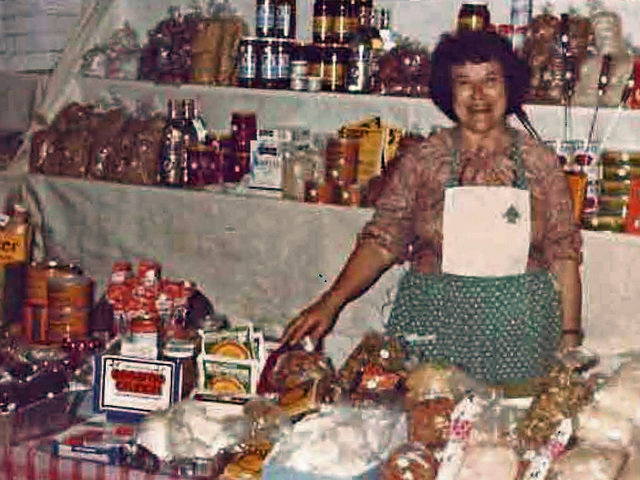
After the war, Mary and Joe were married and began raising a family. Mary grew up on the second floor of her father’s grocery store and helped Joe open their own store. Unlike their parents, both from Lebanon, they decided they did not want their children working in the auto plants or the family store.

Upon hearing great things about Miami from their close family friend John Yunis, they headed south in 1955 and first lived in an apartment house he owned across from the Orange Bowl.

They later bought a house nearby on Northwest Third Street. Their oldest children attended Citrus Grove Elementary and Junior High, and ultimately Miami High. Mary’s father had refused to let her take a scholarship to a local college, despite being at the top of her high school class in Detroit. His old-country attitude was that education was a waste of time, especially for women, who should work in the family business.

This great disappointment shaped Mary’s No. 1 life goal: Do everything possible to give her children the maximum possible education. Joe, who briefly attended the University of Detroit but could not afford to continue, agreed.

As a result, one of their greatest accomplishments was that all five of their boys became doctors: two college professors with Ph.D.s, two orthodontists and one optometrist. The total of 16 different undergrad and graduate degrees for their five boys made up for the two college degrees they were not allowed or could not afford to pursue.

Besides raising and educating her five boys, Mary’s second life was dedicated to helping found and develop in 1973 Our Lady of Lebanon Church, which was established in the old Food Fair market on Coral Way. Joe converted the check-out counter to an altar so the first Mass could be held on Dec. 30, 1975.

When the church was struggling to generate income to pay off its mortgage, Mary suggested a weekend festival, as they had in their Detroit church. With their grocer backgrounds, Mary and Joe went to the farmers market to get fresh fruits and vegetables. She then organized a group of women who worked nonstop for a week to make homemade Lebanese food and treats. She was able to convince many local business people and others to make contributions for the fair, including live music.

The first festival in 1978 was a great success, and since then it has expanded to include arts and crafts, folkloric dances, and other fun activities. The 36th annual Lebanese Festival will be held Jan. 25-27, 2013, and it is the top moneymaker for the church. Approximately 5,000 Miamians and visitors enjoy it each year, but few know who the brainchild was behind it.

Mary was also the founder and first president of the Ladies’ Guild at the church in 1974. She continued her work at the church for decades until her health deteriorated.

Among the many accolades she received from the church and the national Maronite Church was the Silver Massabki Award in 1976. It is given to members of the parish “who have contributed extraordinarily of their time, talent and treasure” by the National Apostolate of Maronites.

In March 2011, she was able to attend a special Mass at the church honoring her and other founders.

Meanwhile, Joe became a general contractor and achieved his dream of building the family home on a two-acre mango farm in Pinecrest where Mary, now 91, lives. Joe died a happy man in 1998 on his 84th birthday in his dream house with his five boys and Mary at his side.

If you were to ask him or Mary about their greatest accomplishment, their answer would be very simple: “Five boys, five doctors!”
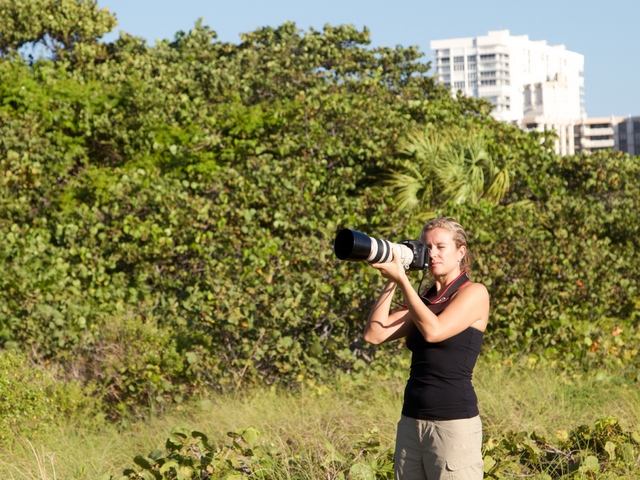
A vast field of lights met my gaze as I flew into Miami for the first time in the late ’90s. To the west was the blackness of the Everglades and to the east, the ocean, but below me were lights — a breathtaking array of tightly packed luminescence, tantalizing and exciting. And ironic, as my love of nature had apparently lured me to one of the more densely packed urban areas in the nation.

I was moving to Miami for graduate school, to study tropical amphibians at Florida International University. Yet as I settled into town those first few months, the jungles I yearned for felt a lifetime away. I was trapped by concrete. The yards in my neighborhood were cemented over; my commute was a maze of gray; I spent my waking hours within the thick concrete confines of the biology department’s bunker-style building.

I remember my feeling of liberation the first time I escaped the monotony and entered the lush oasis of Coral Gables, passing under archways of spreading oaks laden with Spanish moss, exploring Fairchild’s tropical gardens and, at Matheson Hammock, discovering forest unlike any I had experienced. Elation filled me the first time I crossed the Rickenbacker Causeway and discovered natural beaches with intact dunes at Bill Baggs State Park. It was a side of Miami I had somehow been ignorant of. I had spent time in the Everglades, but what I needed were everyday doses of green.

I moved to the Gables. I became a nature guide at the Marjory Stoneman Douglas Biscayne Nature Center in Crandon Park. I worked part-time for the Institute for Regional Conservation, where I expanded my animal-centric interests to include native plants.

The more I learned about Miami’s natural side, the more I appreciated its subtle but stunning mix of tropical and temperate species. I had moved well beyond my concrete confines, but somehow the improvements weren’t quite enough. I finished my degree and headed for Australia.

I spent three years wandering the wilds of Australia, New Zealand, Borneo, Thailand, Cambodia, Vietnam and Laos, teaching in China, and crewing on a sailboat in the Bahamas. Writing and photography became my new means of interacting with the natural world, but it left me baffled as to a career path. Where and how could I combine these with biology?

And as I grew weary of living out of a suitcase, my thoughts wandered toward anchoring somewhere more permanently. A home base maybe, somewhere I could plant roots. I never consciously considered Miami a contender, yet it kept re-emerging on the periphery of my thoughts.

How could this heavily concreted community with mere patches of green be calling to me? My travels had taken me to more-pristine beaches, more-luscious forests, more-impressive vistas and more-intriguing wildlife, and to cities with more environmental awareness and better green space.

But Miami was the overall package. Beaches, forests, wildlife and green space, although scattered, were here. The city held something for everyone. You could find your niche, perhaps even a green one. It was the kind of place where one person might possibly make a difference.

Warily, I moved back to Miami in early 2006. I resumed residency in my former Gables neighborhood, reconnected with friends and began working full-time for the Institute for Regional Conservation. My project was Natives for Your Neighborhood, the online native plant resource. My role was to add the animals. I realized that conservation through backyard gardening was a solution to the concrete world that had so jaded me initially.

Why was Coral Gables such an oasis? Because individual yards and communal spaces were so thoughtfully landscaped with oaks, figs, palms and pines. There were birds in the trees, butterflies on the flowers, and crocodiles in the ponds. There was space for Miami’s subtropical blend of plants and animals.

Given the tools and knowledge, residents of the rest of Miami could create just as tantalizing an oasis. Yet because South Florida’s natural environment is so special, it didn’t take long to realize that those tools did not exist.

There are piles of books on native plants, wildlife gardening and how to achieve naturalistic landscaping for temperate North America. There are even a few aimed specifically at Florida. But South Florida is subtropical. We are different. We are special, and we need our own set of unique books and resources.

I’ve spent the past five or so years creating my own backyard sanctuary on Key Biscayne — testing wildlife gardening techniques to share with others. I’ve spied on the red-bellied woodpeckers that nested in my coconut palm, applauded the successful rearing of two broods of eastern screech-owls in my nest boxes, and celebrated when a purple martin colony finally settled in my martin house after years of futilely playing their calls over loudspeakers every morning of their season to attract scouts to my yard. Now my yard is filled with live calls.

Following these yard successes, I’ve helped complete South Florida’s first bird gardening books — Attracting Birds to South Florida Gardens and Birds of Fairchild. They have allowed me to combine my biology, writing and photography interests in a meaningful way. It’s Miami; I found my niche.

I am proud to say that I am now part of this city of sparkling lights, and being here no longer seems ironic.

Hands shaking…holding back tears…acting as if it weren’t breaking me apart… I said good-bye with tears falling down my cheeks and walked through the doors, not looking back.

They were the doors that would forever separate me from my family. The doors that made it impossible for my grandparents to see me grow up and graduate with honors from high school. The doors that took me away from my three closest cousins, Javier, Joan and Yoandi.

While I was waiting for my flight with my parents and sister Leirys, my mind drifted and I began to wonder why my mother Mirian and father Erick had decided to leave everything behind to start all over in a new country. I could not comprehend why they did not stay with the rest of our family.

The more I thought about it, the less it all made any sense and the more aggravated I became with Mirian and Erick. My parents had never told me the reasons behind moving. What 9-year-old child could ever understand that there was no hope for anyone in their country? How could my parents explain to me that they were leaving because it was the best decision for everyone?

“Mami, why must we leave?”

“Leimys, please, try to understand. We are only doing this so that you and your sister can have a better future.”

“But why? I was fine here with everyone.”

“Trust your parents, Leimys. One day you will understand.”

“No, I will never understand.”

I left Cuba in November 2003 after my family won the visa lottery — the random selection of legal U.S. entry visas granted to Cubans on the island each year.

In Miami, one of our father’s cousins, Nico, waited for us at the airport. Nico welcomed my family into his humble home. He gave us shelter, food, and transportation for three months. My father was very independent and did not like taking advantage of anyone so he decided that it was time to move out after three months.

During this time, I struggled because I couldn’t adjust to all the new changes. I had lived all my life in a place where everyone was family, in the sense that they all helped each other.

My mom enrolled me in elementary school as soon as she could to help me make new friends. Unfortunately, this did the very opposite. I began with a teacher who knew not even a single word in Spanish. The teacher would ask the other students to translate for me but they were cruel and would tell the teacher horrible things about me. They would also make fun of her for not knowing the language. I isolated myself little by little in school.

“Mami?”

“Si, mi niña…”

“I don’t want to go back to school. No one likes me and they are always making fun of me.”

“That can’t be true, sweetheart, they like you. It’s just that they have a different way of showing it.”

The years passed by, and I was now in eighth grade. I was able to understand why my parents made the decision they did and why they sacrificed their lives for my sister and me. I saw that we both had futures in the land of opportunities, while our cousins and friends were unable to better themselves.

Back in our country, the situation had worsened. The majority of the teenagers were dropping out of school to find a job and help at home. I couldn’t help but think that would have been our case if our family had stayed. I couldn’t believe that my cousins would never have the opportunity to attend college.

Although I was very proud of my heritage, I was ashamed to talk about how Fidel Castro left families to die of hunger; how he took their belongings, ripped their freedom from their hands, and separated families forever. I was torn between the culture I once left behind and the new one she was part of. I was growing up with two cultures.

It was difficult for me to adopt the ways and beliefs of the United States because I felt I was betraying my family in Cuba. Visiting my country after nine years confused me more. It was as if I were being pulled by opposite sides.

When I was a baby, I was always with someone related to me, and now I couldn’t accept the fact that people in the United States did not see each other as often. I never considered myself American because I was not born in the United States. Whenever I was asked where I was from my answer was always the same, Cuba.

But this changed after my first visit back. I’ve come to realize I’m part of the American culture and the Cuban culture because I’ve been raised by both. Ever after, when I’m asked where I was from, I say Cuba and the United States.

After living with the separation from my family, I wanted everyone to move to the United States. I embarked on a long journey that consisted of raising funds in order to claim my close family members — my grandparents, uncles, aunts, cousins.

I wanted to give them the opportunity to have the “American Dream,” as my parents had given me when I was a child. I believed my cousins had the right to receive an education and aspire to be someone in the future, something they couldn’t even think about back in Cuba.

I was born at St. Francis Hospital in March 1947.

My parents both came to Miami Beach for work, my mother in 1936 and my father in 1939. They met while working together at a deli, owned by my great aunt and uncle (Mary and Dave Alper).

We lived on 15th Street, near Washington Avenue and the old Miss Ehrman’s dance studio. We were one of the first families to move to the very new Morton Towers. A lot of my family moved to Miami Beach soon afterward.

My grandmother Fannie Malschick, already retired, lived in one of those apartment/hotels on South Beach that now host the rich and famous. She played cards with her cronies, did group exercises on 15th Street and safely walked everywhere.

My uncle, Gilbert Malschick, worked at the Eden Roc as a bartender from the 1950s to the 1970s. My cousin, Allen Malschick, was a well-known Miami Beach photographer who took pictures of many celebrities who entertained at the hotels on Collins Avenue.

My father eventually opened his own deli with partner Phil Seldin (Raphil’s Deli on 41st Street). His customers included the famous and infamous. Before that, my dad owned The Little Inn restaurant in Miami, a popular hangout for soldiers and friends during World War II.

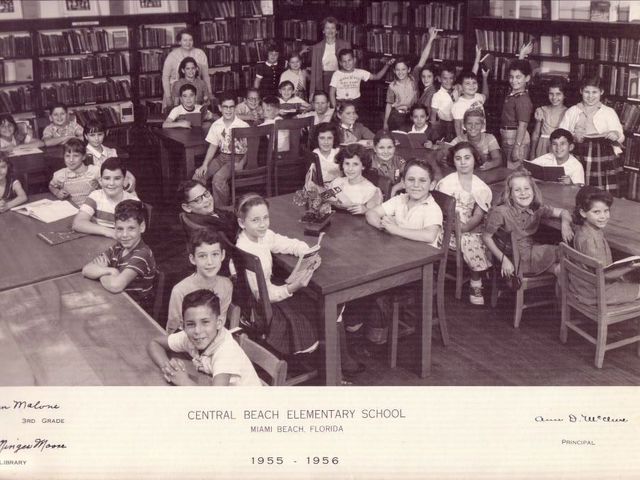
I attended Flamingo Park preschool, Central Beach Elementary, Fisher Jr. High and Miami Beach High School. Many of my friendships, born during those years, have stood the test of time and I am in touch and close to many of those “kids” today.

In 1960, the first wave of Cubans came to Miami Beach. All of a sudden a new culture was introduced, and we had tons of new friends. We spent the sweet years, as I now refer to my childhood, at Saturday afternoon matinees, shopping on Lincoln Road, and eating at Liggett’s or Wolfie’s. Friday night was dedicated to dancing at the 10th Street auditorium, and on Sunday, many beach parties were held at 14th Street and Ocean.

As we began to drive farther from the Beach, we hung at Fun Fair and the bowling alley across the street, Corky’s and Marcella’s Italian Restaurant, known for the amazing garlic rolls. We ventured even farther to the Coconut Grove coffee houses and playhouse.

I left Miami Beach after high school graduation in 1965, but my heart remains in the memories of those wonderful years. Our lives are richer for the experience and we have grown both up and together these many years later.

The year was 1942. My father, Don Terry, was in the Navy stationed at the Everglades Hotel in downtown Miami. During World War II, the hotel was used as a Navy barracks. He swept every floor of that building.

One Sunday evening, he went to Central Baptist Church where he met my mother, Margaret. Instead of marrying right away, he left and served in the South Pacific theater for the remainder of the war.

My parents wrote letters back and forth and each letter was numbered. Not ONE letter was lost over a period of three years. Today I enjoy reading parts of those letters. One day, I hope to write a book about their experience.

In March 1945, they were married and they honeymooned at the Leslie Hotel on South Beach. I was born a year later.

After his honorable discharge from the Navy, Dad returned to Miami and worked awhile at Eastcoast Fisheries along the Miami River. Having taught school in Texas, he applied to teach here in Miami. He taught speech, drama and band at Hialeah Jr. High., Robert E. Lee Junior and West Miami Junior until his retirement in 1975. Sen. Bob Graham is one of his former students. He passed away right after Hurricane Andrew in 1992.

Mother, a native Miamian, was a graduate of Miami Senior High, class of 1935. She worked at the downtown Burdines store and then at Florida Glass & Mirror. She also worked several years as registrar at Kinloch Park Junior High and retired from the payroll department of transportation to enjoy watching her only grandchild.

Also a native Miamian, I attended Miami Senior High, (class of 1964), then went on to Miami-Dade Junior College, Barry College and University of Miami. I taught in Dade County Public Schools for 32 years — at Kinloch Park Elementary, Gloria Floyd and South Miami Heights Elementary, from which I retired from in 2001.

I now co-own and manage Bijoux Dance Center, 4150 SW 70th Ct., where I teach ballroom dancing. I have so many memories of Miami over the past 60-plus years and how it has changed. The skyline, demographics and spoken languages now reflect the cosmopolitan nature of my hometown.

The Orange Bowl is gone, the parade, the old zoo on Key Biscayne, the amusement rides on the roof of Burdines at Christmas, pony rides on Northwest 36th Street, the Coliseum in Coral Gables, drive-in movies, IHOP on U.S. 1, the amusement rides on Northwest 79th Street and 27th Avenue.

But the Venetian Pool and Biltmore Hotel are still are part of the scenery.

“My kind of town, Miami is.”

A child of the Florida sun, I lived in soft T-shirts and sandals. But here I was, walking with my mother to Van E. Blanton Elementary School, attired in a plaid dress and stiff Oxford shoes. September 1959 was a more innocent time; the terms “crack,” “pusher,” “grass,” or “weed,” surely would have conjured images of children playing on steaming sidewalks where brown summer grass and wildflowers pushed hopefully upward.

At registration, we were told by the principal that first graders’ hours were 8:30 to 12:00 noon for the first three months, and after that the school day ended at 2:00. She added that 6-year-olds should walk unaccompanied to school, as it built self-reliance. First graders were served a carton of Home Milk decorated to look like a house and picket fence, and home-baked cookies in the school “cafetorium” for $1.00 every two weeks.

Walking to school in second grade, I discovered dozens of buttons which read “John F. Kennedy.” Who was he? My teacher explained he was running for president on a platform of equal opportunities in housing, school and jobs for all. A wonderful idea, and it was exciting to follow my first election on TV!

In fourth grade, we had many new classmates from “Operation Peter Pan,” in which Cuban children settled in the United States, often not knowing if they would ever see their families again. I vividly remember the first two arrivals. One, “Angela,” was very shy. She wore the same outfit every day and only responded quietly if Spanish-speaking adults talked first, but she always worked hard on her studies.

Then there was “Maria.” We girls would marvel at her vast supply of rustling silk dresses and gold jewelry. She bubbled over with fluent English that her “Abuela” (Grandma) had gone on a shopping spree at Jordan Marsh in anticipation of her arrival, adding, “Abuela is taking me to New York and has arranged for me to have ham on the plane,” smacking her lips. I was insanely jealous!

There was a game we played every Friday called “7-up.” Seven students would randomly tap seven blindfolded students, then we’d guess which person tapped us by asking seven questions about hobbies and interests. Maria tapped me. I guessed correctly with one question about an upcoming trip. The normally happy, bubbly child burst into cries: “Cheater! You looked to see who tapped you.” I sobbed, “I did not, I recognized the swishing silky sound of your dress.” My teacher mediated: “I want you two to talk privately with each other and smooth things over.” We calmly conferred; Maria acknowledged, “I believe you didn’t cheat; my dress DOES swish.” I responded “Why do you keep bragging about clothes and jewelry and trips? You’re making the kids jealous.” She replied, “I’m envious of you all. You have lived here your whole life and I had to leave my home and might never see my relatives again.” I lovingly hugged and reassured her: “This is your new home and I’ll be your new best friend.” Our teacher then had us sit side by side for the rest of the year. We exchanged gifts of crayons and bubble bath. Maria exclaimed, “Together, we can color and draw beautiful pictures of the beaches in Miami and Cuba.”

In October 1962, we had to confront possible mortality. President Kennedy announced Cuban missiles were pointed towards the United States. A tense standoff lasted three weeks. There were simulated air-raids and we would dive under desks for cover; thankfully it was soon over. My teacher told us that, ironically, the brief crisis actually helped thaw some of the relations between nations, apparently for a mutual desire to preserve mankind. Meanwhile, I wrote poems about annihilation which I submitted unsuccessfully to the Blanton Bugle: “Mother is baking an apple pie, soon we all will die.”

November 22, 1963 dawned as an exciting day for me; I had no idea the day would end so tragically. All summer, I had practiced for a jump-rope competition, with Maria timing. Practice paid off, I won the prize jump rope! But sadly, just as school ended, someone shouted, “President Kennedy is dead. He was shot.” We all froze! Teachers admonished, “Go straight home. This is a national tragedy.” School was closed the following Monday. For one month, school flags were flown at half-staff with black ribbons. President Lyndon Johnson announced that he would carry on President Kennedy’s legacy with the 1964 Civil Rights Act. We all learned a lesson that could never be taught in a classroom: that one’s life can be tragically cut short, but grief and sadness can be channeled into helping their memory live on, by carrying on their good works.

Our school years at Blanton were finally coming to an end. Sixth graders were treated to a barbecue and swimming at Morningside Park and pool, equipped with a high-dive. I was afraid to dive but it was now or never! Slicing through cold, clear blue water, my young life passed before me. I had learned so much: reading, writing, math, elections, death and friendship. How you can make things happen; words can make an enormous impact. Crayons and paper can be transformed into beautiful pictures. Gasping when reaching the water’s surface, I heard my teacher exclaim: “Karin, hurry up. It’s time to go. But first, let’s have a rousing rendition of our school song.”

As onlookers gaped, we sang, “We’re loyal to our school, it’s here we learn and live, knowledge strength and beauty too, these to us we give, our teachers show the way to make our dreams come true, Van E. Blanton, Van E. Blanton, we all stand for you.”

Our first family visit to the Miami Public Library (as it was called then) was back in 1958. I was 5 years old, my sister Victoria was 8, and my brother Matthew was 10. We visited a crowded shopping destination, “Little River.”

After going to Woolworth’s, Arno Shoes, Beauty Fair and Larry’s Restaurant, my mother Mildred “Fritzie” Stahl spotted the Little River Library and exclaimed, “I’ve been meaning to get a library card. Let’s go there!” My sister Vickie picked out Lad: A Dog, I got Blueberries for Sal and my father Edmund checked out a large, illustrated Don Quixote and Sancho Panza and read it to us that same night, which my brother especially enjoyed.

Fritzie loved the library so much she quit working at Burdines in 1959 to work at Little River Library full-time. Although her official position was “Clerk Typist I,” with her educational background at American University, and with my father’sbackground as a member of the Art Students League, they embarked on professional endeavors there.

My mother participated in the children’s summer reading club, which my sister and I eagerly joined. Here’s how it worked: during the summer of 1963, a bulletin board was placed at each library branch entrance. For each child, a colorful fishing pole was placed on the board, identifying the reader. Whenever a child finished a book, a fish was added, showing which book the child had “caught” (read).

My sister’s fishing pole was heavily sagging with such “catches,” including Herman Wouk, Ernest Hemingway and Margaret Mitchell. My pole was heavily laden with Beverly Cleary and Mark Twain selections. At the end of the summer, 15 children from the Little River library boarded a Coast Cities Coaches bus downtown to receive a certificate of achievement. A total of 725 children, each of whom had read a minimum of eight books, attended from libraries throughout the county.

My parents also presented many puppet shows at the library. One memorable show was Treasure Island, by Robert Louis Stevenson. My father designed cloth puppets and painted scenery, and my mother wrote a script based on the book. After the show was over, my mother was delighted because several children asked, “Where can I get a copy of Treasure Island?” A “classic,” which might otherwise be just sitting on the shelf was being noticed!

I remember one librarian who worked with my mother in Little River, Miss Grace Rayfuse. Fritzie knew the library so well she would just look up a book if children asked for one, but Miss Rayfuse suggested, “Always say, ‘let’s look in our card catalogue,’ if it is a child asking for a book.” That became a catch-phrase in the library.

It has now been more than a half-century since our family’s first visit to the Little River library. My brother, mother and father died many years ago. My sister and I still live about three miles away from the library (we are currently zoned to use the North Miami library). We still love books. Our living room resembles a library itself with floor-to-ceiling bookshelves filled to capacity.

I decided to take a sentimental trip back to the Little River library recently. The exterior looks much the same with its slanted pillars and double-glass doors. Inside, it was much different. Children had replaced pencil and notebook paper with laptop computers. Instead of “[our] card catalogue,” children now expertly skim a computer mouse to search for books.

Sadly, there doesn’t seem to be nearly as many books available as when I visited the library in the 1950s and 1960s. The entire shelf near the checkout desk was gone. In its place was a display of videos, compact discs and DVDs. Everything seems so different. And yet the library director informed me the county still offers the summer reading club. Despite all the new technology, there are still thousands of books available for checkout. I checked and yes, Treasure Island is still available.

I was born in 1946 in Greenwich, Conn. Every winter we would take the train to Miami and stay at the Gulfstream Hotel in Miami Beach.

One could look down the beach and not see another hotel nearby. There were a lot of “snowbirds” (although that term had not been coined yet) who stayed there, among them some of the rich and famous, as well as the infamous.

I had my picture taken with J. Edgar Hoover when I was 4. Sorry to say I lost the newspaper clipping of that photo in my many moves. I had no idea who this pudgy man was or why the photographer was making a fuss over us. There were other children around my age. There was Sherman Billingsley, whose father owned the famous Stork Club in New York. There were the Kresge children, Cary and Kitty. Their family owned Kresge’s 5 & 10 cent stores. The name may not sound familiar now but the K in Kmart stands for Kresge.

My family eventually bought a home in Miami Beach and we moved there full time when I was 6. Growing up in Miami Beach in the 1950s and ’60s was wonderful. I don’t think we realized then what a paradise we lived in. There was the dog track at the end of South Beach. The Art Deco hotels were filled with vacationers from New York and New Jersey. There were the Orthodox Jewish diamond dealers who would come in the long heavy black coats, even in the heat. There were the retired people in their orthopedic shoes schlepping their lounge chairs. Frank Sinatra was singing in the Poodle Room of the Fontainebleau, and once I passed Sammy Davis Jr. on Arthur Godfrey Road. He was this tiny man with two enormous bodyguards.

I went to St. Patrick’s School and then to Carrollton in Coconut Grove. Many of our classmates had fled from Cuba. They taught us the meaning of freedom and added spice to our city. I remember driving to school during the Cuban Missile Crisis, never realizing that we were in such danger. We were just excited to see all the cute sailors and soldiers all over Miami.

I have returned to Miami Beach a few times over the past years. It is not the place I grew up. The small motels vibrate with the beat of Latin music and “the beautiful people” come from all over to lie on the beach. If it weren’t for Joe’s Stone Crabs, I would think I was in the wrong place. I am glad this amazing city has been revitalized. In the 1970s, the hotels showed their age. The shops on Lincoln Road were all closing and parts of it looked like a ghost town.

The people who walk the beach and sidewalks now don’t know what the Stork Club was or that there were such things as 5 & 10 cent stores way before the dollar stores came into vogue. The young ones won’t know who Hoover was, nor will they have heard of Sinatra or Sammy Davis Jr., except through old black-and-white photos or a song they hear in an elevator. I don’t know if 41st Street is still called Arthur Godfrey Road or if people remember that Jackie Gleason did his TV variety show from the Miami Beach Convention Hall.

I do know that I was blessed to have grown up in paradise. I hope those who reside there know how lucky they are and make wonderful memories that will come back to them when they are old and living in New Jersey.

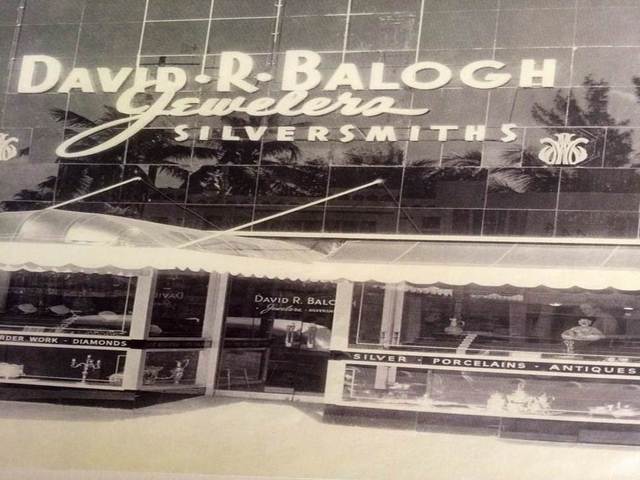
My father, David R. Balogh, is a Miami Beach legend. Most Beach people knew him and many, many shopped at his Balogh jewelry store.

Today, wherever I go, whether Miami, New York City or even Sun Valley, Idaho, I meet people who proudly show off their long-ago-purchased Balogh treasure.

My dad’s story is in many ways typical of the tales of those designated by Tom Brokaw as “the greatest generation,” those men and women who helped us defeat Nazism in World War II and then returned home to create the most prosperous and free nation, not even fathomed by our founding fathers.

I do believe, however, that my dad has some very distinguishing qualities, especially his unusual embodiment of both an ambitious drive coupled with romantic warmth and charm. He was the Navy vet who sent home every paycheck to his loyal wife Sallie. And when he returned from the war, they drove their old station wagon from New York City to subtropical, undeveloped Miami Beach to begin their family life with infant daughter Joan. What drove him to Miami, in addition to his run-down jalopy, was his conviction that Miami Beach was nirvana with its consistently sunny weather, the ocean and the palm trees. This was the venue to start a business and a life.

My parents rented a very small store on Arthur Godfrey Road, as they certainly could not afford Lincoln Road. They began a “mom and pop” antique business. My dad’s optimism led to his conviction that his customers would invest in and celebrate a new, good life with lovely items both to wear and to adorn their homes. He believed both in Miami Beach and in America. He was spot on about his customers, Miami Beach and America.

In addition to his foresight and optimism, he had skills. He had an uncanny business savvy, sensing where and how to buy, and he had a charismatic ability to sell. He loved beauty and believed in investing in real, tangible items. This mom and pop business grew just as he had envisioned; it was enlightening to witness the business morph from a two-person, seven-day-a-week operation into an internationally renowned jewelry store. He opened stores in Coral Gables, Hallandale, the Diplomat Hotel and much later on Madison Avenue in New York City. But the basis of his business and his heart remained in Miami Beach.

As my father’s business grew, so did Arthur Godfrey Road. It was symbiosis; David Balogh and Arthur Godfrey Road fed off each other and grew together. He purchased real estate on the street and involved himself in leadership roles, such as establishing the parking facilities to help all the small businesses and restaurants in the area. He was active in the Miami Beach Chamber of Commerce and many local and national philanthropies, such as Mount Sinai Hospital, juvenile diabetes and the University of Miami. He became imbedded in the fabric of Miami Beach life. My dad retired at age 92, but he still puts on his suit and tie every day and enjoys riding around looking at his properties.

My dad’s dedication and focus went considerably beyond his jewelry and real estate businesses. He was an accomplished musician — a pianist and flutist. He actually met my mom in Astoria, New York, through his music; he was her piano teacher. He played first flute in the Miami Beach Symphony and I remember feeling special to be called up on stage to conduct when the symphony came to my North Beach elementary school. He was so proud that he was able to play under the maestro Arturo Toscanini. My dad’s special motto, still displayed in his closet shelf, is “you never fail until you stop trying,” and this definitely permeated the inner structure of his businesses and his family. Fortunately, I was able to incorporate some of my parents’ strong work ethic and very ambitious, yet measured, approach to life.

I grew up in a very close family and was indoctrinated with family-first values. As with his business life, my dad also fulfilled his familial goals. My younger brother, Bobby, a “chip off the old block,” has built his life in the Miami area. After Yale undergraduate school and then law school, Bobby has taken our father’s real estate interests beyond even David’s expectations. He and his wife, Cara, have molded two talented children, Andrew and Alex, both Yale undergraduates.

I am a practicing psychoanalyst in New York. My husband, Marty, guided by my father, opened his own jewelry business in New York almost four decades ago. We have two wonderful and accomplished daughters. Cara is a Ph.D. and professor of American literature, while her sister, Anna, another “chip off the old block,” is in the real estate business. Clearly, all this was the result of the example he set, the drive he had and the quality and quantity of time he and my mom spent with us.

The Greek hero Achilles was given the choice by his goddess mother Thetis to live either the adventurous, but short life or the long, undistinguished one. My dad, now 94, my hero, never had to make this choice. He has lived both.

Our family moved to Miami Beach from Brooklyn, N.Y., for my grandmother’s health. It was 1943 and Dad was with the Navy in the Pacific, so it was Mom, Aunt Rose, sister Bonnie, Grandma and me.

We settled in a one-bedroom, one-bath apartment on Third Street and Jefferson. Our apartment was close to the dog track, so we could hear the announcer call the races. Bonnie and I would wager on each race while in bed, and we could hear the announcer proclaim the winners. My best friend, Sonja Lovseth, and I played with our dolls, danced in our house, and rode our bikes everywhere.

South Beach Elementary School was three blocks away, and provided the best education one could ask for. We had an assembly program every week and my sister, Bonnie, was assembly leader. I was captain of the safety patrol.

We learned Spanish beginning in third grade, and I can remember singing the Cuban national anthem in the classroom. Señora Ransom always carried a lace hankie and smelled of Old Spice cologne. The teachers were all wonderful – Mrs. Bleich in sixth grade sex education told the girls to be proud of our bodies, Mr. Little and his violin produced operettas, and Mr. Sanders was our handsome and very dignified principal. Mr. Vasey, the custodian, lived in a cottage next to the school, and he was always Santa Claus for the holidays.

Our apartment on Third and Jefferson was downstairs from Ben Cohen, an attorney for the notorious Miami Beach gambling syndicate, which attracted outside gangsters such as Meyer Lansky. He and his beautiful wife, Joan, had a baby girl and I went upstairs to see the baby.

In the bedroom were about a dozen telephones. I remember asking my mother why anyone needed so many phones. There is a window in the Jewish museum with Ben Cohen’s name and Meyer Lansky’s.

Grandma, as an observant Jew, needed to be near the synagogue, which was on Washington Avenue, and today is the home of the Jewish Museum. My sister and I attended the Hebrew School there. On Fridays when I got home from school, I had to help Grandma prepare for the Sabbath. I usually chopped vegetables or turned the grinder for the chopped liver.

When we were done in the kitchen, I would help her in the bath, wash her hair, and scrub her back, which was crooked from osteoarthritis. After her bath I combed her white hair, set the waves, and she rested for a while in her bed. Grandma had very bad asthma. There was always an oxygen tank next to her bed.

Sometimes I polished her nails. When the sun set, she would light the candles and bring in the Sabbath. Bonnie and I would not write, cut, or, later, watch TV for 24 hours.

During WWII, soldiers were stationed on Miami Beach. They marched by our house, singing army songs, which we quickly learned. Mom and Aunt Rose went to dances at hotels used as a USO (a United Service Organization with a mission to support troops).

Dad returned from the war, lived with us a short time, and then my parents divorced when I was 9. Bonnie and I continued to see our father, who worked in the window at Wolfie’s, Pumpernik’s and the Rascal House as a salad and sandwich chef. Sometimes he would take us for lunch at Burdines in Miami.

Walking on Lincoln Road in the 1940s and ‘50s was like walking on the Champs-Élysées, with luxury shops like Lillie Rubin, Saks Fifth Avenue, and so many others. Once my father took me into Saks and bought me red butter-leather sandals and an emerald-green, silk-taffeta cocktail dress. He introduced me to the finer things of life.

Bonnie and I had always wanted a dog, so when we moved to Miami, we got our first dog, a precious Jack Russell named Bing. Next, we got a blue tick hound named Penny.

We would take her to Crandon Park, where she ran for hours along the beach chasing shadows in the sand. We also had a pet duck named Christine. She followed Penny like a shadow and would greet me when I returned from a date in the evening. One day the duck disappeared. We found out several years later that Grandma had made a trade with the butcher.

I attended Ida M. Fisher Junior High on Miami Beach from seventh through ninth grades. One of my boyfriends was Norman Cement, who later became mayor of Miami Beach. In the 1950s, my grandmother and mother bought a duplex in what is now Little Havana.

I did not want to leave my friends, so Mom arranged for me to be picked up in Miami by Mr. Dutton, my music teacher, so that I could finish ninth grade with friends I’d had since second grade. Later, I attended Miami High.

On my own, I applied for a scholarship to the University of Miami, and did not tell my mother until I was accepted. I majored in Elementary Education.
At the end of my junior year, I flew to Nashville to attend the wedding of my friend, Marie Lefkowitz. It was at this wedding I met my future husband, Irwin Kaplan.

We moved to New Jersey in 1956, after we married. We have been married 57 years, have three children, 10 grandchildren, and four great grandchildren.

Translate »