Skip to content
Named Best Museum 2022
by Miami New Times

I was born and raised in Brazil.

I was 17 years old when I began my banking career there. In 1986, I was offered a job at a Brazilian bank to manage its Miami branch. I lived here for four years before leaving to work in London and Grand Cayman.

I returned to Miami at the end of 1997 and purchased an apartment in Key Biscayne, where I lived for two years. At the beginning of 1998, I was hired as financial director of a Brazilian company on Brickell Avenue.

In 2000, I was offered a job at an American bank to open a branch here in Miami.

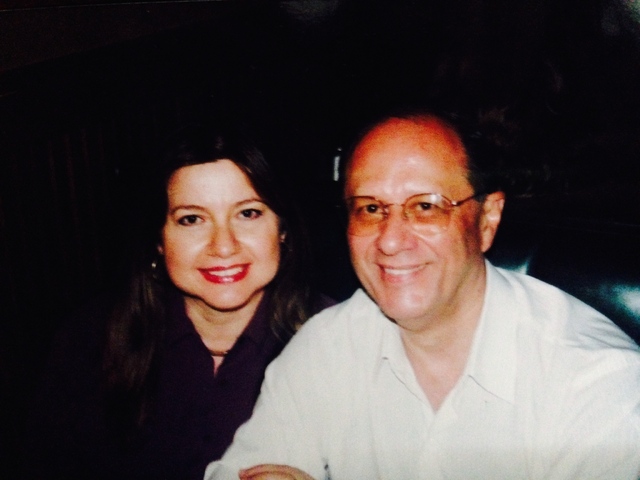
In the meantime, I met Carmen Crespo, Cuban-born and educated in Chile. Carmen was a singer by night, financial consultant by day. Upon first meeting her, I was inebriated by her voice.

After dating for four years, we became engaged, and were married in 2008. Carmen is a big supporter. I am sure that her encouragement empowers me to continue to forge ahead, beyond any obstacles that we may face in our lives together.

For many reasons, I realized that I had to move from Key Biscayne. I sold the apartment and bought a new one in Doral. When I married Carmen, we bought a beautiful house in the city of Sunrise. We’ve been here ever since.

I worked at the American bank until 2010, when I left the banking industry to devote myself to writing.

In Miami, I participate in some cultural organizations and associations that allow me to expand my thoughts by writing essays on different subjects. I have written two books, with versions in Portuguese and Spanish.

My experience in Miami has shown me that here we have the opportunity to make relationships with many kinds of people. For example, at a meeting you can sit at a table with someone who is from Colombia, another from Venezuela, another from Chile, another from Asia, another from Europe. We have to maintain a diversified dialogue with people of different cultures who do things differently. This gives us ample possibility to be flexible with others and, at the same time, with ourselves.

And we have to accept or accommodate ourselves to those styles of life to be happy within the environment where we choose to live. We learn so much from this experience.

In my opinion, it’s not the people who should accommodate us. Instead, we should accommodate them. In terms of culture itself, I believe that in Miami we have the opportunity to come face to face with these situations.

In addition, if we explore, we can find many cultural events here. It’s a question of looking for what is most convenient for us. If we go to Miami Beach, for example, we can find a lot of events occurring on a daily basis.

We cannot talk about this city if we do not mention the beaches. We have to know how to use the beaches and to take advantage of them. It’s in the best interest of our health, too, because we know that the water from the sea has a lot of energy.

Simultaneously, we are among other people who want to share their time and experience with us, and it results in a beneficial situation for everyone. The same can be said for tourism. If we do not consider the tourism part of this community, we will be divorced from a visible reality.

We can note this when we are walking in downtown Miami or even in Miami Beach. We will see a lot of people with different clothes, different hats, different smiles. But everybody who appears in Miami comes with a purpose. They come here to be happy and to enjoy the sunlight that nature offers.

As residents, we should take advantage of all that Miami has to offer. We should enjoy it as the tourists do. We should be flexible — go to the beach, go to the museums, and know the cultures of other countries. We should also be on the lookout for the variety of events that the city offers. This is the integration that exists between ourselves and this cosmopolitan city that opened its arms to receive us.

This is Miami, a city to which I am deeply linked.
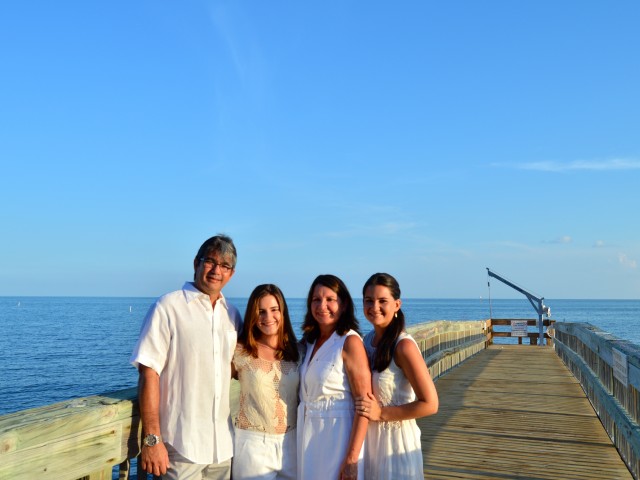
Every night after dinner, the four of us would gather around the cramped dining table in our apartment on Kendall Drive, quizzing one another, working on our English pronunciation, memorizing medical concepts, multiplication tables, SAT vocabulary — whatever had to be memorized — drying every stubborn tear because there was not a second to waste.

We were like a startup. When my parents decided to leave Cuba and moved us to Miami in 2002, they were determined to build our own future from scratch. My father, Héctor Chicuén, an electrical engineer, would find work at Florida Power & Light. My mother, María Victoria García, a pediatrician, would certify her medical degree. My younger sister María Cristina Chicuén and I would attend college. This was our business plan. What we lacked in resources, we made up for in drive, an unspoken no-excuse philosophy, an overabundance of togetherness.

Within our family enterprise, teamwork was essential. Whether at a Home Depot, a local Christmas tree shop or a cement factory, my dad would pack his weeks with two and sometimes three jobs in order to make ends meet so that my mom could devote her time to the medical certifications. Some days, when the orange juice disappeared from our kitchen as we ran out of money, when stress drove my dad to twitch his eyes like a flickering emergency light, my mom would close the textbooks.

“No es fácil,” she’d say as she grabbed a mop and drove the short distance to Pinecrest, where good cleaning services were always welcome at the ranch-style estates carved deep in the lush, tropical landscape. Or we’d head to a local gym together. My mother took care of toddlers while their parents exercised, and I prepared protein shakes at the gym’s cafeteria.

These were my high school years, which now blur in my mind, forming a mosaic of sleep deprivation, five-minute phone calls to relatives in Cuba and endless homework for as many advanced courses as I could fit in my schedule. On a rare occasion, as a reward for good grades or a promotion, as a little pause in all the hustle, we would treat ourselves to a family meal at Denny’s.

“Hi, hello, I would like a coffee with milk,” my mom would request in her rehearsed English version of “Hola, qué tal, un café con leche por favor.” The waiter, of course, would proceed to bring a glass of American coffee and a glass of milk.

We also used to rent movies from Blockbuster. We had given up on movie theaters since our first experience, on the release of the original Harry Potter movie. Dressed in our best clothes for what we thought was a special night out, we were baffled by the teenagers in shorts and tank tops — “hasta en chancletas” — flooding Kendall Regal Cinema.

Time had never been so precious to us. Every hour of my father’s work meant $6, $8, $9, $14, $18 to sustain the entire family. One more hour of study brought my mother closer to certifying her medical degree. One more hour at school meant my sister and I were more fluent in English, more prepared for a complex education system we were determined to conquer. That’s why we would arrive at family gatherings with a textbook under our arms, or pass on parties altogether if there was an opportunity for overtime work or a tutoring session.

We took advantage of every resource and free lunch. Even free dinners. On the morning of our first Thanksgiving, the staff from my sister’s elementary school gifted us with a sumptuous turkey we had no idea how to cook. “We’ll roast it like pork,” we thought, as we did in Cuba for every major celebration. Soaked in our traditional marinade of garlic and bitter orange, accompanied by yuca, fried plantains, steamed white rice and black beans, our own bicultural turkey was soul-nourishing. And we were deeply thankful.

Steady, we kept studying and working as hard as we could. It was well into our third year in Miami when the unmistakable light of good fortune crept through our windows. My father received the dream offer from Florida Power & Light. My mother passed her medical board exams and was accepted to a residency program at a prestigious hospital in New York. I received a letter of admission and a generous scholarship to attend Harvard University.

Miami refused to let us go. As we readied to embark on a new adventure in the Northeast, just a few weeks before my high school graduation, my mother was diagnosed with breast cancer.

We would not give up. We had won the most difficult battles — separation from our family, poverty and unemployment, loneliness, the inability to express our most basic needs and feelings. We would not give in to illness.

For months, my mother fought through chemotherapy, radiotherapy and hours of surgery until she recovered and claimed the spot she had earned so rightfully at her medical residency. Today, she is a primary-care physician in Little Havana, an area of critical medical need.

My father’s career at Florida Power & Light spans over 10 years. As he has risen through different roles and departments, he has been able to coach other recent immigrants on successful applications for employment at the company.

My sister is now in her third year of college at Stanford University. Every summer, she returns to Miami, where she has interned with the Miami Heat and farmers markets to complement her studies in health policy and urban food systems. She is preparing herself to promote wellness in our city after she graduates.

I am at Miami Dade College. From my post in the college president’s office, I recognize in the faces of many of our students the same determination and thirst for opportunity that first brought my family to Miami, and which continue to drive every one of our individual and collective endeavors.

This city has given us a brighter present than we could have ever imagined.

It’s our turn to pay it forward.

Maria Carla Chicuén is the author of ‘Achieve the College Dream: You Don’t Need to Be Rich to Attend a Top School.’

I remember looking out the window as the plane took off from Havana.

It was Aug. 9, 1960. I was 15 years old and leaving my country with my mother and brother to reunite with my father in Miami. He had left months earlier to find schools and a place to live. We didn’t realize it would be for good.

My dad, an attorney with a passion for travel, got a job in sales with Guest Airways and an apartment at 23 Phoenetia Ave., Coral Gables. He enrolled my brother and me at Merrick Elementary and Coral Gables Senior High, respectively.

Two other families we knew from Havana lived in the same eight-unit building, and we would gather in the small patio in the early evenings. But Miami was a very quiet town in those days and we were asked to move.

We did, a few blocks away, to Madeira 25A, an apartment building that has also gone condo, and gone are the wooden stairs with the telling creak that would let me know Abuela was coming down the stairs. Gone, too, are the Coliseum, a great place to bowl, hang out and listen to Top 40 in the jukebox, and the old Coral Gables library, which I remember every time I smell the rain.

My dad opened a travel agency, Caribbean Cruises, on Ponce de Leon Boulevard next to the Coral Theatre. Neither has been there for years. My mom went to work at the Shelborne Hotel in Miami Beach as an executive secretary to the general manager, which meant she ran the place. That is where I had my honeymoon a couple of years later and where, a couple of years ago, I went for karaoke.

My parents made those lean early exile years a warm and fun experience. We had an old car that my dad named “Can you give me a little push,” and we took car trips to Matheson Hammock and Crandon Park. We sang along with musician Mitch Miller and played Clue and Monopoly and we were active on the Cuba issue and even slept in Bayfront Park once to protest something WCKT news anchor Wayne Farris had said.

My boyfriend and many friends were in the Brigade 2506 that invaded Cuba in 1961. He went to prison and the experience changed his life and the lives of Cubans everywhere. But my parents helped make the memories of those times mostly good ones and, at 16, wounds heal fast.

In Miami, I discovered tuna fish sandwiches on plain white bread and French fries with ketchup. I also discovered prejudice. Looking for places to rent, we saw signs that read: “No blacks. No dogs. No Cubans.” The counters at Woolworth and Grant’s were segregated, so were water fountains and buses.

The good old times were not good for everyone and it almost seems impossible that those memories could co-exist with so many wonderful ones: driving up to Jimmy’s Hurricane on U.S. 1 and Bird Road, where servers on roller skates would come to the cars, just like in the movies; parties at the Venetian Pool, Friday nights at the Pizza Palace, window shopping on Miracle Mile and snacking at Jahn’s Ice Cream Parlor (where John Martin’s Irish Pub now stands). Sundays, after mass, the go-to spot was Walgreens downtown.

There were Friday night dances at the Coral Gables Youth Center and sock hops at the school gym, where rock ‘n roll was danced the way many have only seen on TV. There was the thrill of a pep rally and the way the air smelled around football season – I don’t know about your high school, but we were the Cavaliers, and that meant something!

There was a Howard Johnson’s inside the old Coral Gables bus station and we would stop on our way home from school for their famous “caramel” ice cream ( Dulce de Leche did not come into its own until 40 years later).

My younger brother was born at the old St. Francis Hospital in Miami Beach in 1961 and one year later, I graduated from Gables High, went to Dade County Junior College and had my first part-time job at Jackson Byron’s in downtown Miami. My first real job was as clerk typist at the Welfare Department; my husband worked three blocks away at what used to be Mary Jane Shoes on Flagler. We had met at the Vedado Tennis Club in Havana as teenagers, reunited here and got married at the Church of the Little Flower in Coral Gables in 1963. Our three children and four of our grandchildren have been born and raised in Miami.

When I first came to what is now my city, there was hardly anything open after 7 p.m. The Freedom Tower was the tallest building and Dadeland Mall was considered the “boondocks.” Our now ubiquitous Cuban coffee could only be had at home – Jose Enrique Souto, Sr., a family friend and the owner of Bustelo and Café Pilon, would deliver bags to our home from his truck.

My husband developed his professional career in computer systems at Eastern Airlines and, after its demise, became an executive at System One and EDS. When writing got the best of me, I began working at Harper’s Bazaar in Spanish, followed by a stint publishing Eventos Miami, a local social/cultural magazine. Miami in the ‘80s was ripe for that decadent scene: Ensign Bitters, Cats, The Mutiny, The Jockey Club and Regine’s in the Grand Bay, where Julio Iglesias visited often and the Dom Perignon flowed easily.

I’m presently retired from advertising, and we just celebrated our 50th wedding anniversary, right here in Kendall. Most of our family lives here and has grown with Miami. Is it perfect? No. But it is ours. And it is home. So when someone tells me we have the rudest drivers and we’re a banana republic and yada, yada, yada, I say “just move, chico.”

On Nov. 1, 1987, at 30 years old, I left my home and family in Haiti to search for a better life. The economic and political situation was unbearable, and my family was being abused by the Duvalier regime. I promised my parents I would come back for them.

On that day, I boarded a boat headed to Miami with 100 other Haitians in hopes of a safe arrival; sadly, not all of us made it. When we finally reached the coast of Miami, some people had died of dehydration and starvation. I came to this city with only the clothes on my back and the promise I had made to my parents.

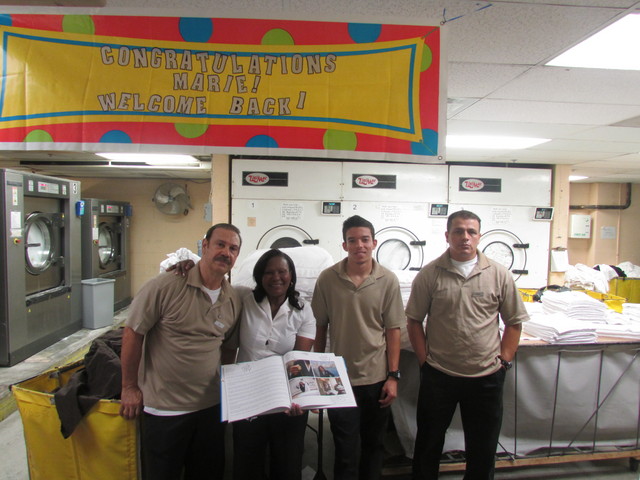
During my first year, I struggled working a series of odd jobs to support my family until Dec. 1, 1988, when I joined MDM Hotel Group as a housekeeper at Dadeland Marriott Hotel. Shortly after, I was promoted to room attendant and then in May of 1993, I was the first associate to hold the position of laundry supervisor. I met my husband in 1988, and we got married in 1992 when I was expecting my second child. While I was working and raising my children, I attended night school and received my nursing degree.

In 1997, I was thrilled to fulfill my promise to my parents and was able to bring them to the United States. After just a few years of living in the United States, we received the devastating news that my mom was diagnosed with lung cancer. I kept my faith and prayed every day for the improvement of my mother’s health.

A few months later, I received a phone call at the hotel from my mother’s oncologist telling me that my mother had only a few days to live and to pick her up and spend as much time with her as I could. Then a miracle happened: Just a few days later, my mother was cancer free.

My mother lived a beautiful life and lived until July 2013. Sadly, shortly after my mother’s miracle, my father was diagnosed with throat cancer, which quickly ascended to his brain.

I am the sole provider in my home, not only supporting my family here but also my family in Haiti, and I not only work as a laundry supervisor, but also as an on-call banquet server. There are days where I work in the laundry department until the afternoon, change in the locker room into my banquet uniform, and go straight to work. Sometimes I work a banquet until 3 a.m., get an hour of sleep, and start getting ready for work at 4 a.m. . Every single day, I give 100 percent to my work.

Being the only supervisor who speaks Creole at my workplace, I volunteer when needed to translate. Even though I always have personal matters taking place in my life, I try my best to give back to the community. When the earthquake hit Haiti, I immediately organized a successful donation drive and volunteered my time. I was a major driver of the hotel’s “Haiti Relief Drive” that was hosted as a Spirit to Serve Community Program. I wanted to help the people who were affected, especially the families of my coworkers.

Throughout my 25-year career for Marriott, I have been honored with multiple awards. I was Associate of the Month in April 1991 and May 1999. In 1999, I was also recognized as Associate of the Year. Since 2006, I have won Manager of the Month several times, and in April 2013, I won Leader of the Month. In 2013, I joined the “Quarter Century Club” for Marriott International, an exclusive club for those associates who have been with the company for 25 years. I am grateful and humbled to work for a company that truly appreciates its employees.

In 2013, I was awarded the prestigious “J. Willard Marriott Award of Excellence,” the highest honor given by Marriott International to only 10 employees every year. This was a tremendous honor considering that Marriott is located in 74 countries with more than 325,000 associates worldwide. In May 2014, I traveled to Washington, D.C., where I received my award in front of executives of Marriott International and had the incredible experience of having dinner with top executives.

Throughout all the hardships I suffered during my life in both Haiti and the United States, I feel blessed for the opportunities I have had. Working for Marriott International has helped support my family and me for 25 incredible years. It has also allowed me to fulfill the American dream.

I always wrote poetry but there was nowhere here in Miami where I could share my poems. You would go crazy looking for a group or something. Nothing. Cultural? Back then in the ’90s? No.

So one day I heard about this book fair. There was a group that came from Palm Beach. It would come every three months to the Miami Dade College on 27th Avenue, and I signed up. I started going there and thought, “Wow! This is great!”

Somehow, when it comes to narrative, editorial or short stories, I never know what language is going to come out. Sometimes I start writing and it comes out in English, then I have to do the translation to Spanish or vise versa. With the poetry, 99.9 percent of the time it comes out in Spanish. I feel in Spanish. It’s weird because it’s like I think in English and I feel in Spanish, and that’s us, Hispanics.

I was very active in that group and immediately it got me onto the board. I tripled membership because all the Hispanics were arriving. It was mainly Cubans but then I had a few from Nicaragua and other places. Not as many as there are now. There’s so many Venezuelans and Colombians; there weren’t that many back then.

I noticed that the group was just poetry and that there were people who would paint and would act. They were so interested in other things and they were so frustrated. The book fair was only every three months, as well.

Eventually, I left and I started to think about opening something that would embrace all nationalities and could be bilingual. We have a lot of Hispanics here who write better in English but there are also people like me who go to Spanish first.

The idea was to have a bilingual, international and nonprofit group. I would call it The Cove/Rincón. I went to our lawyer and we set it up together. By August 1995, all the paperwork was done. I opened it to the public on Oct. 20, 1995, at Florida International University.

The classroom where we held our first meeting was full. Believe it or not, we still meet at the same place that we met 18 years ago. The department of Latin American and Caribbean Center at FIU has been our blessing and it is our home. My hat is off to the center, and I will always be thankful.

We have chapters all over Latin America and across the world. There are delegates from Argentina, Colombia, Venezuela, Chile, Puerto Rico, Nicaragua and Mexico. We’ve even expanded to Europe and Japan.

Our motto is: “Do not let nationality, race, sex or age make a difference: let us be one.” I used to add “in the arts” at the end but I cut that. I think we need to spread it further than that. At the same time, I also say, “and let the bohemian loose” because nobody can be boxed in when you have a creative spirit. It will drive you crazy.

My journey toward The Cove/Rincón began when I came to Miami on July 16, 1961. My dad used to travel here for business a lot. He had his own business in Cuba, and he knew what was going to happen there so he came ahead. After two years, he got us out as well. I was starting seventh grade at Sts. Peter and Paul Catholic School.

We moved to an apartment on Southwest Fifth Avenue and Third Street, a half block from the Miami River. I remember Hurricane Cleo and the river overflowed. It came into our apartment and I was sweeping fish for a week after the water went down.

For the first year, I’d come from school and go to the backyard. There was a guava tree that I would lean against and cry day after day. I was prepared to go back to Cuba. I do thank God to this day that my parents had the vision to get us out. But we were separated from the rest of our very large family.

I guess all those things influence you to do things in your life to help people: to unite countries and to unite people. That’s what The Cove/Rincón is all about. I have friends from everywhere.

After Sts. Peter and Paul, I attended Immaculata-La Salle High School. In high school, my Hispanic friends and I, we had each other. We didn’t go home and tell our parents how we felt about wanting to go back to our homelands. We knew that would make their situation more difficult. Instead, we would go to each other and talk about it.

After I married my husband Frank, my daughter Frances arrived nine months later. She was a honeymoon baby. Then came my son Alexis. I began Miami Dade College around the time that my kids started school. I studied psychology and children’s literature.

Once they were in college and they had their own cars, that’s when I was able to do more and start The Cove/Rincón.

Besides writing, I have a love for horseback riding. Throughout my life, we owned horses. My kids both ride great. We would come horseback riding from where Dolphin Mall is now. That used to be a 420-acre ranch where we would keep our horses. We would come riding from there to my current house on Southwest 132nd Avenue and Bird Road and have a barbecue.

I love where I live. I saw Miami change from a town to a city, a magic city that we’re blessed to live in. I’m thankful for this country that has opened its arms and given us the freedom that we were looking for.

This story was compiled by Museum of Miami intern Lisann Ramos as recounted by Marily Reyes.

It was August 1957 and my mother and I had driven for three days in her 1956, blue-and-white Mercury. A drive that took us from the cold winters of the Catskills in New York to Miami in search of warm weather and a job prospect for my stepfather.

I can remember my mother exclaiming, “Oh, how balmy,” in her Dutch accent when we stopped in Golden Beach for a hot fudge sundae.

In those days, there were no condos or hotels blocking the ocean’s breeze — just the cool night air.

Shortly after our arrival, we rented a house on Northeast 173rd Street and Second Avenue. It was small, but I had my own room where I could play Johnny Mathis records all night long. I would fall asleep to his singing and the hum of a fan.

In 1958, I became a ninth grader in North Miami High. Corky’s restaurant on Northeast 163rd Street in North Miami Beach became “the place.” You could sit at a table, order fries and a Coke and sit with your friends for the whole evening.

When we finished eating, we moved to the parking lot, where we turned on the car radios. We slow danced to the Drifters, fast danced to the Everly brothers and sang to the Capri’s.

Relationships were made and broken in that parking lot — thanks to the owner of Corky’s.

And then there was 48th Street Beach. Right next to the Eden Roc Hotel — now the Wyndham — 48th Street Beach was THE hangout for teens from all over Miami. We sat there for hours, walking from blanket to blanket, sharing old stories and making up new ones.

One day I saw a handsome young guy sitting on the stone wall. I noticed a crowd gathering around him so I walked closer. I couldn’t believe it — it was Johnny Mathis!

My stepdad, Eugene Damsker, played piano in the Fontainebleau Hotel on Miami Beach, which then was only 3 years old.

The hotel housed many famous nightclubs. Names such as The GiGi Room, The Boom Boom Room, The Poodle Lounge and the famous La Ronde Room featured many famous stars of the day — Frank Sinatra, Marlene Dietrich, Judy Garland and Tony Martin.

I remember my friends and me standing outside The Boom Boom Room, with our ears pinned to its glass doors, listening to the Latin rhythms of Pupi Campo and his orchestra. If we stood outside long enough, the “maitre d” would finally let us in and give us a table close to the band. We would mambo andcha-cha our hearts out.

Years later, my stepdad returned to where his heart was — classical music and composing. I will never forget the night he was the featured soloist with the Miami Beach Symphony. On Feb. 13, 1966, he performed his original composition, Variations on a Theme From Ernest Gold’s Exodus’ and got a standing ovation.

From 1965-67, my stepdad was the featured pianist in the Sammy Spear Orchestra at the Miami Beach Theatre for the Performing Arts. Sammy Spear was the conductor for the Jackie Gleason Show. Those were the days when the famous Honeymooners was broadcast live and televised all over the country.

My mother, Mira Damsker was born in Amsterdam, The Netherlands, to a very artistic family. Before Hitler invaded Holland, her parents sent her to London to study art with the Polish painter, Raymond Kanelba. Because of the impending danger in Europe in 1940, her parents sent her to New York to live with an uncle. She never saw her parents or brother again, who were victims of the Holocaust.

For 12 years, she taught oil painting at Miami Dade Community College. In the 1970s, 10 of her paintings were displayed in the Fine Arts Theatre on 21st Street in Miami Beach. The Miami Herald interviewed her and took a picture of her in front of one of her paintings — a Russian Dancer named Juta, which now adorns our walls.

In September 1977, my mom appeared again in The Herald Neighbors Section. The title of the article was, Vegetarianism: Diet Makes Her Nicer. The article was accompanied by a photo of her sitting at her kitchen table — her face glowing with pride at her recently concocted vegetarian fare. My mother passed away six years ago. I know that somewhere, she is proud that her name is back in The Herald Neighbors’ section, once again — via her daughter.

I have been living in the Miami area for more than 50 years. I went to school here, married here, raised my children here. Although the landmarks have changed or disappeared, they are imprinted in my memory and will last forever.?

I was born in the city of San Pedro, California. Our family is very large and of Mexican descent. I was the youngest of four children. We grew up in a Catholic parochial school. Then I chose to further my education.

I was the only one in my family who went to college. And I was the only one who decided I did not want to follow the routine that everybody did in the city where I came from, which is basically working on the docks and in the shipyard.

In my third year of medical school, I found that gastroenterology was a field of medicine I really enjoyed. Afterward, I applied for fellowships including the hepatology program at the University of Miami. And that’s how I landed here in 1988.

I spent two years in that program and then proceeded to apply for a GI fellowship and was accepted at the University of Florida in Jacksonville. I did my two years of GI training from 1992-94 in Jacksonville and then returned to Miami in 1994 to join the digestive medicine associates group.

Coming from a Mexican-American family, the traditions that people in Southern California have in relation to the Latino population is extremely different than what I felt here in South Florida.

In California, prejudice and racism is subtle but it’s present. Here, I think there’s a tremendous sense of unity and a sense of being proud of your heritage. There was an exposure to Latin culture and all parts of Latin America, especially the Cuban population.

It was something that I never had a flavor of in California. I realized how much I liked that.

Unfortunately, in Southern California, growing up in the society that my parents grew up in, they were so tormented about being Mexican American that many of them chose not to speak Spanish to their children because they didn’t want them to go through the ridicule that they grew up with.

So despite the fact that my grandparents spoke no English, most of the grandkids could not communicate with them because the parents did not speak Spanish to us.

I felt that was a tremendous disadvantage. Here in South Florida, if you don’t speak Spanish, you’re at a disadvantage.

That was my desire for actually staying in South Florida. I felt that the Latin community was extremely strong and I felt a kinship to staying in South Florida and learning all about culture in the Latin community.

I thought it was an intriguing and a wonderful experience. I’ve always studied Spanish in school. I was the only one in my family who wanted to be able to speak and communicate with my grandparents and all my family, including my family in Mexico.

I learned Spanish in school and I forced my parents to teach it to me and fortunately, when you immerse yourself into a society where they only communicate to you in Spanish, you learn it very quickly.

Fortunately or unfortunately, the accent I now have after 23 years in South Florida is very different than the accent that a Mexican American would have. I’m told this relentlessly when I go home to visit my family.

I do miss the California weather. I miss the terrain. I miss the mountains, the deserts that California offers. But the advantages that South Florida has are something that I chose to take. And that’s why I just decided to live here after 1990.

I currently live on the beach. I lived in Kendall for a few years but was fortunate to purchase a home many years ago on the beach, which I decided I wanted to renovate.

I’m very happy living on the beach at the present time. It’s not in Miami and it’s not in South Beach, but it’s in between. I feel very protected and secluded and I love the environment on the beach.

I work in Miami Lakes, at Mercy Hospital and at the University of Miami. I love my job and I love working with my patients here in South Florida.

The Latin community is very emotional. They’re very drawn to making sure that their loved ones are taken care of. I take pride in what I provide patients, the ability to understand the disease process in a way and to the degree that they feel they understand what may be going on.

I have worked hard to get where I am in my life. I feel that never stopping and never holding back on any dream you may have or desire you want to do, is important. And it doesn’t stop.

Once you’ve reached your goal, you can go on to something else. So after being in medicine, being a physician since 1985, I realized that doing other things in life are important. I recently went back to school and I completed a business degree at the University of Miami. I was able to attain an MBA in Health Sciences and I finished that in 2012.

It was extremely rewarding and it was a goal. I think anybody, Hispanic or not Hispanic, can reach his or her goals in life. That doesn’t mean that they can’t continue and go on in life and attain new things.

When people ask me if I love a person romantically, I kind of laugh. I laugh because I’m sort of having an affair. I love my Venezuelan wife, whom I met in Miami. But, truth be told, I am already in love with something else — the city of Miami.

My love has drawbacks. She’s quite vapid at times, moody, a big tease, spoiled, prone to unpredictable outbreaks and often doesn’t speak the same language. She also constantly finds ways to try my patience and push my most sensitive buttons. But like the girlfriend you try to break up with over and over and over again, just when you are ready to permanently push the “sayonara” button, she kisses you on the cheek.

That’s the city of Miami. That’s the city I love.

I have lived in seven places during my lifetime. Miami is now tied with Hanover, New Hampshire, as the place I have resided in the longest. I can’t think of two diametrically opposite places to live. But somehow, as much as I loved my time in New Hampshire and everything it still represents, there is no way I could leave my current home.

As a Jew from New England who went to high school in the ’80s, I had two very different perspectives about this city. One was the perspective I got from visiting my relatives who, like many other northern Jews’ relatives here in South Florida, were old and a little too predictable. I therefore saw Miami, at least when I visited, as the world’s largest retirement home.

Then there were the images captured in the hit TV series Miami Vice. The opening theme song conveyed it all — Miami had rhythm, pink flamingos, fast cars, beautiful people, lots of drugs, was a fashion trendsetter, and everyone spoke in some type of slick code. Oh, and the party never ended.

As I got older, I started getting the feeling that the only thing better than watching Miami Vice on TV was seeing it in living color. As for all the retirees, well, I was hoping they wouldn’t be in front of me on the golf course.

I can pinpoint the moment I decided to move to Miami. Everything in life happens for a reason — at least that’s what I would like to think. I hated my public school teaching job in Nashville and couldn’t wait for a change in scenery. Then I was invited to Miami in February 1999 for a college friend’s wedding.

The wedding was awesome. There were beautiful women, great food, drinks and dancing until the early hours of the morning. Families had their kids up on the dance floor past midnight. I wasn’t “in Kansas anymore,” that’s for sure. But the wedding alone wasn’t enough to seduce me.

I remember driving home from the wedding about 4 a.m. with the convertible top down. The next day I went to the beach and played tennis at Flamingo Park. In February.

Prior to that weekend, Miami had always been a tourist town to me, as well as my idea of the good life. I was single, in the early stages of my teaching career, and a tennis and golf junkie. Why not be a full-time tourist in the place that matched my ideal lifestyle?

The choice was already made.

I have now lived in Miami for more than 14 years, and I am still figuring out what this place is all about. There is nowhere like it in the United States, and perhaps on Earth. Maybe that’s why I love it so much. Like that crazy but intoxicating lover, she is never the same person two days in a row.

There are memories from my time here that would have been absolutely impossible to match anywhere else. For the sake of avoiding a novel of “only in Miami” stories, I will mention only two.

I will never forget my first visit to the Orange Bowl. I wasn’t much of a Canes fan at the time, but my immediate reaction was, “Man, this place is the largest outdoor frat house I’ve ever been to.” This was just after parking right in the middle of someone’s well-cut lawn and getting some weird Miami-style sandwich from the same guy. As the game progressed, I realized two things: one, the fans were nuts about the Canes; and two, anyone rooting for the opposing team was in for some zealous retribution.

The second memory is the scene on Calle Ochoa few evenings before the Kerry-Bush election in 2004. Before I moved to Miami, I never really thought about the political dynamics here, and that was probably just as well. There was a John Kerry campaign headquarters right next to La Carreta on Eighth Street. Right across the street from it, however, was Versailles.

The scene was surreal. I don’t speak a lot of Spanish, and I couldn’t really understand what anyone was screaming. But whatever it was, it wasn’t a bunch of pleasantries. I have never seen such political fervor. Reality TV at its finest.

The date was Jan. 17, 1961, when I left my beautiful island of Cuba and arrived in Miami. I was 10 years old. I always had a dream of going to Miami Beach, so I was very excited, but I couldn’t understand why my mom looked so upset and why my dad stayed behind. My mom kept saying we will be returning in a few months, but my father and grandparents joined us six months later, and the few months became the rest of my life.

For the first year, we all lived in a big old wooden house with my aunt, uncle and cousins in what today is known as Midtown. Eventually we all moved on our own but always within walking distance of each other. Then I finally got to live in Miami Beach, on Española Way and Meridian Avenue, what is now known as South Beach. How exciting!

Growing up in South Beach was absolutely wonderful. I attended Central Beach Elementary, now known as Fienberg-Fisher K-8. Leroy D. Fienberg was my wonderful principal; the school was named after him after he passed away. I then attended Ida M. Fisher Junior High and Miami Beach Senior High. Dr. Solomon Lichter was my incredible principal for those six years.

On weekends, my friends and I would walk to Lincoln Road or go to the Cameo Theater to see double features for 25 cents. The first summers were spent attending camp and fun activities at Flamingo Park. As I got a little older, the 14th Street beach was like a home away from home.

I am from Cuba but I am also Jewish, so that makes me known as a “Jewban.” Being a Jewban growing up in Miami Beach was a fun thing; we were a very close group and everyone knew each other, so we adopted the 14th Street beach as our own. We would then hang out at Dipper Dan, our favorite ice cream place. We also would go to Fun Fair in the north part of the beach and take buses to downtown Miami to buy records and have lunch at Woolworth.

My school years were wonderful. I learned English quickly and attended class with so many of my old friends from Cuba. In the 1960s, I would be sitting in class and when an old time friend would show up, it was so exciting that our sixth grade teacher, Mr. Bergman, would stop teaching and give us a few minutes to hug and catch up with the old days.

At Beach High, I became active with several school clubs. I enjoyed being an officer in them and most of all I enjoyed being part of the Usher Club, which allowed me to go to concerts, the circus and the Jackie Gleason show for free. Because of my grades and activities, I received a scholarship from the Lion’s Club that helped me with my education.

I definitely had the Beach High spirit, which I still do. I have worked closely with the reunion High Tides committees. To this day, there is always excitement when I meet someone from Beach High.

Because of my love of Miami, I decided to stay in town for college and graduated from the University of Miami with a degree in education. Years later I received a master’s in leadership and administration from Nova University.

While attending the University of Miami, I met my future husband who was a law school student there. Can you imagine: a Jewban from Miami meets and marries a guy from St. Paul, Minnesota, who played hockey. I was the first Cuban he ever met. I didn’t even know what hockey was and had never seen snow. I made him promise me that he would never move back. We will be celebrating our 43rd anniversary very soon.

Life has been great. I have taught and have been an administrator for several Miami-Dade County schools. We live in the north end of town and never want to leave the area. Our children attended Florida schools, University of Florida and Florida State, and you can just imagine football season at our home. Our children live in Broward and we are the proud grandparents of five. It is so wonderful to be able to live close to where I grew up and still have the children nearby.

Growing up in Miami has just been incredible. I have seen many changes to our city, but it has always been truly a “Magic City.”

I was born in Nicaragua. I lived there until I moved to Miami in 1979 when I was 19 years old. I moved with my daughter; she was almost 2 at the time.

From the moment I moved to Miami I felt at home. My sisters were living here. The first time I came to Miami from Nicaragua, I was 5 years old and I loved it; my memories from it when I was a child were beautiful. And I came often with my parents from Nicaragua. When I moved here, I was acquainted with the city. My sisters living here also helped a lot.

When I was 12 years old, something terrible happened: I lost my father, Julio C. Martinez. He died here in Miami while I was living in Nicaragua. It was a sudden death and it was really difficult. I was very close to him, so it was hard on me. I’ve always been a happy and cheerful person, but in my heart I had that sense of void, that sense of missing my dad, that grief. It is because of that great loss that I do what I do, and that’s why I share this with you.

My daughter went to school here at Carrollton School of the Sacred Heart, which she loved. When she was in high school, I decided to go back to school myself. I started at the south campus of Miami Dade College, and now I teach a class there on world religions.

At Miami Dade, I chose psychology to be my major, and then I applied to different schools and was accepted at the University of Miami. I went there and took a class in world religions, which I loved, so I took on another major, religious studies.

There I took a class that really attracted me, called “Death and Dying.” I realized I needed it for my own sense of loss. It was very healing.

When I was in Nicaragua, I didn’t have counseling or support groups, or books to help me cope with my grief. I had my family and my Catholic religion customs at the time to wear black and white. There was no music, no TV and no going out because I was mourning. But at my young age, I did not understand what was happening.

When I finished at UM with a double major in psychology and religious studies, I started the graduate program on gerontology at Florida International University and then went to St. Thomas University for a certificate on loss and healing.

Now I help people cope with grief, including immigrants who suffer from a loss of homeland, traditions and language.

Since I moved here, 30-something years ago, Miami has grown so much. A place that I like to go to is Brickell Avenue near downtown Miami. It’s beautiful, and I love to see how downtown Miami has grown. Mary Brickell Village, and now the Design District — it’s so cosmopolitan.

I’m proud to have accomplished my purpose in this amazing city. Miami is such a warm city. And being Hispanic, with so many Hispanics here, I feel at home.

Translate »