Skip to content
Named Best Museum 2022 by Miami New Times

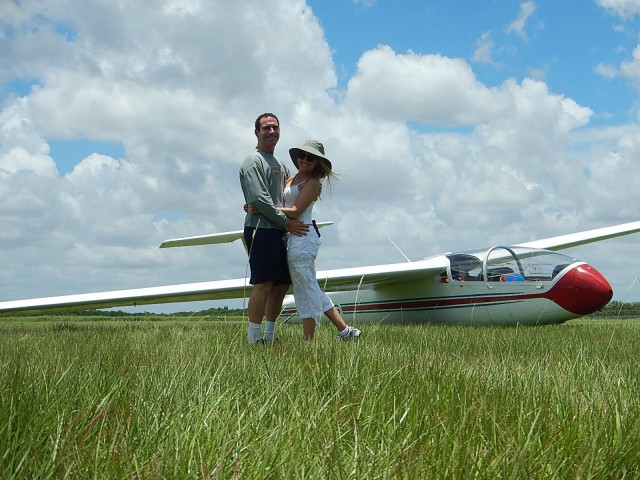
I reached to pull the yellow lever that would release our glider’s tether to the noisy silver crop duster that was towing us to 3,000 feet over Homestead at the edge of Florida’s Everglades.

This lever — and the towrope that connected us to the plane — was our only link to the powered flight. If I tugged the lever toward me, we’d be on our own in the ether, no engine, just a narrow white cylinder with wings relying on elusive warm updrafts to keep us aloft. My new boyfriend, sitting behind me and piloting the glider we had rented for an hour, had instructed me to release us from the crop duster — but I hesitated.

The origins of my fear of flying are a mystery to me.

I’d suffered life-long psychological paralysis surrounding air travel. Maybe this fear was the result of an association between flying and becoming motion sick at 7 years old as an unaccompanied minor on a flight from Miami to New York. Perhaps the dread was the due to being tossed around in a seaplane in a terrifying lightening-rife storm halfway to the Bahamas from Miami. Maybe a clue to my irrational fear could be found in the panic attack and vomiting episode just after take-off from Miami International Airport after drinking too many dirty vodka martinis in the airport bar in an effort to quell my terror of jetting to Philadelphia.

I didn’t fly anymore. Period.

Over the years, I’d ridden almost every rail Amtrak travels. I’d taken the Queen Mary 2 to Europe and back over the North Atlantic, avoiding air travel and eating a lot of shipboard scones. I turned down free vacations to places in corners of the globe where it would have been impossible to travel expediently by land or sea. Amtrak doesn’t go to Malta.

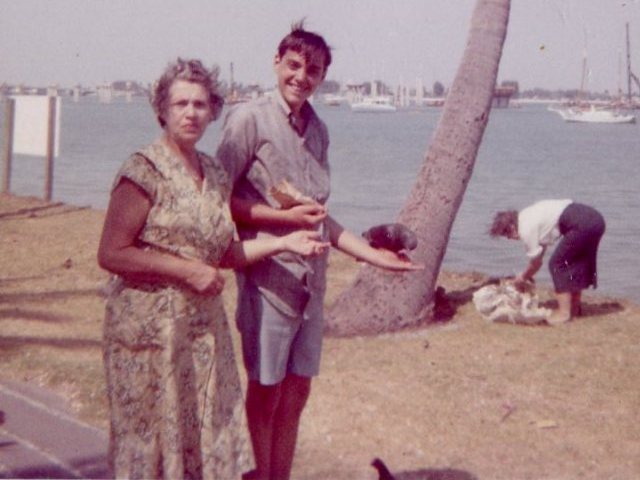
The irony of my fear is that I’m an exotic-bird enthusiast, expert, and rescuer. I’ve written more than 30 books and hundreds of magazine articles on the care and training of parrots, canaries, finches, and doves. I’ve been a fan of birds since I was a little girl when my grandfather taught me how to charm pigeons to eat from my hands in the coop he built in the backyard of our South Miami home. Birds are the only animals with feathers, structures so strong they can lift a wearer many times her weight into the air for flight across oceans.

But I wasn’t a bird.

I found comfort in the terra firma. So how was I gliding over palm tree nurseries and sawgrass prairies at the edge of the swampy Miami wilderness in an engineless aircraft, being asked to pull a lever that would set the glider free? I hovered my hand over the T-shaped bar with its chipped canary-colored paint and thought about the risks of becoming unanchored and set adrift. What if the sky couldn’t sustain us? We were, after all, heavier than air, and unable to flap like birds.

My paramour is an officer in the Coast Guard based at the Opa-locka air station whose job is to fly helicopters over the South Florida seascape to spot Cuban migrants, save people from sinking boats, and pluck heart-attack victims and pregnant ladies in labor from the decks of cruise ships. He earned a medal for rescuing people from rooftops after Hurricane Katrina, an honor for which he is too humble. He teaches people to fly small planes and gliders and has a 4-seater plane of his own. There could be no one better with whom to share the sky.

I wanted to pull the yellow lever. I have a vague understanding of how wings work, but for the most part, keeping a 10,000-pound hunk of metal airborne seems like magic to me. What if I pulled the lever and we plummeted like a pelican into the sea?

The yellow lever was warm as I grasped it and eased it toward me. With a clunk the glider lost purchase on the towline and we separated from the noisy tow plane, leaving us alone with the only sound of the air whooshing over the clear plastic hood above our heads. Below us, houses with blue backyard pools gave way to tomato fields, which yielded to vast swaths of wetlands.

No hyperventilating into the vomit bag he had brought for me. No crying or hiding my face in sweaty palms. No whispered foxhole prayers that if I made it back to the ground alive I’d never eat bacon again.

“Let’s fly with the birds,” my boyfriend said, turning the glider sharply toward the hazy blue Atlantic.

He knew my weakness. He had told me that a great way to find updrafts—the fuel a glider uses to stay airborne — was to follow turkey buzzards as they swirled beneath the clouds, rotating inside an invisible funnel of wind. We flew toward three buzzards, their black wings outstretched, feathers gleaming in the sun. I forgot about being half a mile above the earth, instead focused on how close the birds allowed us to them, the communion we shared up there in the firmament. I forgot about gravity. I forgot that I was afraid.

Maybe my fear of flying isn’t about plunging to the ground at maximum velocity in an exploding tube filled with fire, as I had once believed. Maybe I just hadn’t met anyone until that moment that made flying fun, someone with whom I wouldn’t mind being set adrift. Experiencing flight with him had become, in a single gesture, with the pull of a yellow lever, more important than my anxiety.

My dad, Anthony Abraham, just turned 99 and lives in the same Coral Gables house he bought in 1952.

I wasn’t even born yet, but my mom, dad and my three siblings — George (7), Marion (5) and Judy (3) left Chicago and arrived in Miami in 1950 along with my cousin Dorothy, who was 16 and planning to attend the University of Miami.

Rumor was that my oldest brother George had asthma and it was advised that he should live in a tropical climate. My dad wasn’t going to move to the Caribbean, so Miami was the best solution.

When my family first arrived, they stayed at The Casablanca Hotel on Collins Avenue in Miami Beach. Driving up to the hotel, there was an Arabian Nights-themed porte cochere featuring four giant genies (originally nude but eventually draped due to controversy).

The fun times for the kids was going to the movies at the Miracle Theatre on Miracle Mile in Coral Gables or swimming at the beach in Crandon Park.

Later, my family rented a house across from the hotel for one season. They used to go to Wolfie’s, the landmark restaurant at 21st Street and Collins Avenue. It was the family hangout; the place was always crowded and opened 24 hours. Sadly, the restaurant closed in 2002.

Meanwhile, while house-hunting in 1952, my mom found a house in Coral Gables, perfect for the whole family. There was a fireplace in the middle of the living room, which is no longer there, nor the terrazzo floors.

My mom loved to cook Lebanese food and have the family over for Sunday dinners. I loved to help my aunts in the kitchen rolling up grape leaves. It would take two days to prepare our feasts — kibbee, tabouli, grape leaves and cabbage leaves stuffed with Lebanese style rice and lamb.

On Aug. 24, 1956, a wonderful life began for my brother Tommy, who was 4, and me, age 5.

My mother and dad came to Beirut, Lebanon, to visit our orphanage, The Creche. They came to visit the children and brought toys. Tommy, who went by the name Ghattas, elbowed my dad while I tugged on my mom’s skirt. Without any hesitation or spoken words, they adopted both of us.

My other siblings were all adopted at birth. George came from Kansas City, Mo., Marion was from New York City, and Judy was from St. Louis, Minn.

When we arrived in the summer of 1956 on National Airlines, we were greeted by Ralph Renick, the legendary Channel 4 anchorman. We could only speak French or Arabic, except the words, ‘Thank you,’ which my dad had taught us on the plane. When we arrived at our new home, we saw the pool and our reflection in the pool. This was the happiest moment of our lives.

My dad owned what became the largest Chevrolet dealership in South Florida on the corner of LeJeune Road and Southwest Eighth Street.

Eventually, he bought the land across the street for used cars, then haggled with the fruit market owner to buy another piece of land on the other side for the truck department. At one point, he owned every corner of LeJeune and Eighth Street.

My parents had become part of the social circle in the ’60s and ’70s. They were a part of a new organization, ALSAC (American Syrian Lebanese Associated Charities), which still exists today. The entertainer Danny Thomas, also of Lebanese descent, founded St. Jude’s Children’s Research Hospital with a group of Lebanese businessmen, including my father. They created a board in 1957. Today, second and third generations of the original families, including my brother, Tommy, sit on the board.

In the late 1950s, my parents started a local fundraising event for the hospital, called The Miracle Ball. Danny Thomas would bring a different celebrity to the event each year. Robert Goulet, Perry Como, Sammy Davis Jr., and even Frank Sinatra performed at the last ball in 1984, which was dedicated to my mom.

We used to host the pre-cocktail party at our home, but eventually started having the party at the Eden Roc hotel. The gala was held at the Fontainebleau hotel, when Ben Novack owned it.

Mr. Novack had bought our house while we were in college, but when my brother and I returned to Miami, my brother insisted my parents buy it back, which they did in the 1970s.

My brother and I went away to college but returned to Miami. I have followed in my mother’s footsteps, fundraising and hosting parties in my home. My brother Tommy has taken over the family foundation and runs our dad’s office. My father eventually sold the dealership, then repurchased it in the early ’80s.

He sold in again in the late ’80s. My dad finally retired after my mom was taken away from us in 1984. He has dedicated the rest of his life to helping schools, hospitals and churches.

I have been so blessed to have been chosen by two remarkable, loving and generous parents. My father’s motto for our family foundation is: “Always help those less fortunate, no matter what race, color or creed they were.”

When people ask me if I love a person romantically, I kind of laugh. I laugh because I’m sort of having an affair. I love my Venezuelan wife, whom I met in Miami. But, truth be told, I am already in love with something else — the city of Miami.

My love has drawbacks. She’s quite vapid at times, moody, a big tease, spoiled, prone to unpredictable outbreaks and often doesn’t speak the same language. She also constantly finds ways to try my patience and push my most sensitive buttons. But like the girlfriend you try to break up with over and over and over again, just when you are ready to permanently push the “sayonara” button, she kisses you on the cheek.

That’s the city of Miami. That’s the city I love.

I have lived in seven places during my lifetime. Miami is now tied with Hanover, New Hampshire, as the place I have resided in the longest. I can’t think of two diametrically opposite places to live. But somehow, as much as I loved my time in New Hampshire and everything it still represents, there is no way I could leave my current home.

As a Jew from New England who went to high school in the ’80s, I had two very different perspectives about this city. One was the perspective I got from visiting my relatives who, like many other northern Jews’ relatives here in South Florida, were old and a little too predictable. I therefore saw Miami, at least when I visited, as the world’s largest retirement home.

Then there were the images captured in the hit TV series Miami Vice. The opening theme song conveyed it all — Miami had rhythm, pink flamingos, fast cars, beautiful people, lots of drugs, was a fashion trendsetter, and everyone spoke in some type of slick code. Oh, and the party never ended.

As I got older, I started getting the feeling that the only thing better than watching Miami Vice on TV was seeing it in living color. As for all the retirees, well, I was hoping they wouldn’t be in front of me on the golf course.

I can pinpoint the moment I decided to move to Miami. Everything in life happens for a reason — at least that’s what I would like to think. I hated my public school teaching job in Nashville and couldn’t wait for a change in scenery. Then I was invited to Miami in February 1999 for a college friend’s wedding.

The wedding was awesome. There were beautiful women, great food, drinks and dancing until the early hours of the morning. Families had their kids up on the dance floor past midnight. I wasn’t “in Kansas anymore,” that’s for sure. But the wedding alone wasn’t enough to seduce me.

I remember driving home from the wedding about 4 a.m. with the convertible top down. The next day I went to the beach and played tennis at Flamingo Park. In February.

Prior to that weekend, Miami had always been a tourist town to me, as well as my idea of the good life. I was single, in the early stages of my teaching career, and a tennis and golf junkie. Why not be a full-time tourist in the place that matched my ideal lifestyle?

The choice was already made.

I have now lived in Miami for more than 14 years, and I am still figuring out what this place is all about. There is nowhere like it in the United States, and perhaps on Earth. Maybe that’s why I love it so much. Like that crazy but intoxicating lover, she is never the same person two days in a row.

There are memories from my time here that would have been absolutely impossible to match anywhere else. For the sake of avoiding a novel of “only in Miami” stories, I will mention only two.

I will never forget my first visit to the Orange Bowl. I wasn’t much of a Canes fan at the time, but my immediate reaction was, “Man, this place is the largest outdoor frat house I’ve ever been to.” This was just after parking right in the middle of someone’s well-cut lawn and getting some weird Miami-style sandwich from the same guy. As the game progressed, I realized two things: one, the fans were nuts about the Canes; and two, anyone rooting for the opposing team was in for some zealous retribution.

The second memory is the scene on Calle Ochoa few evenings before the Kerry-Bush election in 2004. Before I moved to Miami, I never really thought about the political dynamics here, and that was probably just as well. There was a John Kerry campaign headquarters right next to La Carreta on Eighth Street. Right across the street from it, however, was Versailles.

The scene was surreal. I don’t speak a lot of Spanish, and I couldn’t really understand what anyone was screaming. But whatever it was, it wasn’t a bunch of pleasantries. I have never seen such political fervor. Reality TV at its finest.

Although my mother, the former Edith Leibowitz, was born in New York, she graduated from Miami Beach High in 1942. So it was only natural that she and my father, Marvin Kuperman, would move to Miami following their marriage in 1946.

I was born in Victoria Hospital (which no longer exists) in 1948. We lived in a small one-bedroom apartment in what is now the heart of Little Havana.

In 1950 we moved into a “huge” two-bedroom, one-bath house with a Florida room in a new development called Coral Gate (purchase price – $10,000.00). The development consisted almost entirely of young baby boomers and their families. No one had air conditioning so everyone kept their front door open since all houses came with screen doors which allowed for cross ventilation and which invariably remained unlocked the entire day. (Needless to say, no one had alarm systems!)

My sister, Debbie (Debra), was born in 1951, which initially was exciting until it became apparent that she was going to permanently reside in and basically take over my bedroom.

My mother didn’t have a car in the early fifties so we walked almost everywhere. Nearby was Margaret Ann, a large grocery store on the corner of Southwest 32nd Avenue and Coral Way, the new Sears Roebuck on Coral Way, and of course all of the stores on Miracle Mile.

On the northwest border of Coral Gate stood the Coliseum, which housed a large bowling alley (at which my parents bowled regularly) with adjoining athletic fields. Every Saturday at 1:00 p.m. an air raid siren which sat on the top of the Coliseum began blaring for several minutes.

I attended Auburndale Elementary where I majored in misbehaving. I still managed to win the fourth grade spelling bee and was also one of the fastest kids in school in the shuttle run.

A large segment of the Coral Gate kids took a city bus home from school each day and all of us would spill out of the bus at the Southwest 18th Street and 32nd Avenue stop. We all purchased bus cards which cost $1.50 for 30 fares and which the driver would punch holes in. Between the ever-increasing hole punches and our stuffing the cards in our pockets, they became frayed and tattered within a week or two.

Two or three mornings a week we had Home Milk delivered to our doorstep by our milkman. Every once in a while he gave us blocks of ice to play with (which quickly melted), as well as wooden milk crates. In the afternoons (especially in the summer) the Good Humor Man in his starched white uniform would drive up and down every street broadcasting music from his truck in order to market a variety of ice cream. I also remember lady truck drivers who regularly delivered laundered cloth diapers to those families with babies.

After school we played baseball and football right in the middle of the street. Every once in a while we got into trouble when a stray baseball bounced off of someone’s car.

At a young age, my father began taking me to watch the “original” Miami Marlins play at the old Miami Stadium. The Marlins were a Triple A team playing in the International League, which played U.S. teams as well as teams from other countries, including the Havana Sugar Kings. We were once very fortunate to attend a game in which the late great Satchel Paige pitched.

In the late ‘50s the kids in my neighborhood began collecting Topps baseball cards which came in a small wrapper and also included a piece of bubble gum as thin and hard as one of the baseball cards. We would “flip” the baseball cards off a wall and keep whatever cards our card landed on. Incredibly, it also became popular in our neighborhood to attach our cards to the spokes of our bikes with clothespins which resulted in the bike making loud clicking sounds when we rode. I still get nauseous thinking about all the Ted Williams, Mickey Mantle and Willie Mays cards that got shredded in our bikes.

My grandparents owned a small apartment building on South Beach and we would visit them almost every Sunday. We often walked to the beach where we swam in the crystal clear waters of the Atlantic Ocean. On other occasions my grandfather and I would walk to the Clevelander Hotel armed with a pickle jar and fishnet to catch guppies in the small waterways which lined the hotel.

Some of the restaurants that we frequented were the Big Wheel drive-in located just south of Coral Way on Southwest 32nd Avenue, the Red Diamond Inn on Lejeune Road, Harvey’s Restaurant on Flagler Street, as well as Wolfie’s and the Famous Restaurant on Miami Beach. A special treat was a trip to Fun Fair on the 79th Street Causeway. All of these restaurants closed decades ago.

In the summer I spent many days playing baseball and other sports at the Boys Club on Southwest 32nd Avenue and Dixie Highway. Almost every summer, my family went on a “stay-cation” to the Colonial Inn Motel on Sunny Isles Beach. Not only did the motel have a low diving board, it also had a high diving board, both of which are unheard of in today’s liability conscious society. We used to run off the high dive with legs flailing, screaming “Geronimo!” and hope that we didn’t land on any unwary swimmers. In those days, all females, regardless of their age, were required to wear bathing caps.

Although Miami is now a bustling, culturally diverse, cosmopolitan city, I sure enjoyed being a kid in the simpler, slower paced Miami of the fifties.

My wife, Mayita, and I live in Pinecrest. After practicing law in Miami for more than 40 years, I see retirement in my future. Although our son lives in California, my daughter and her family live nearby. My granddaughter is the fifth generation of my family to call Miami home.

I wanted to spend my retirement entertained with a million things to do each and every day. My husband Steve, on the other hand, wanted to spend his retired life in the sun, fishing for permit. He said, “Key West.” I said, “New York.” I was determined to remain in New York, and Steve was just as determined to move to Florida.

Steve hated the cold and the sleet and the snow. And he loved fishing and baseball.

Steve and I visited Florida on vacation in 1957, and we stayed at the Nautilus Hotel. Even the names of the hotels conjured up visions of far-away, exotic lands — Casablanca, Sans Souci, Marseilles, Fontainebleau, Eden Roc, and Seville.

In 1972, my aunt rented an apartment next to the Diplomat Hotel where, each night, famous stars performed, and she would take us to her favorite restaurants: Rascal House, Pumpernik’s, Corky’s, and the ever delicious Tivoli.

In the end, I gave in — with a compromise. We would move to South Florida but not to Key West.

So in 1994, we moved into the same building on the beach where my aunt lived, next to the waiting-to-be-imploded Diplomat Hotel. I soon discovered that the heat didn’t bother me at all, and having a pool where people congregated and created friendships certainly helped us quickly get used to our new home.

Strolling down Lincoln Road years ago, when the middle of the street was still open to traffic, was always thrilling. And Steve and I loved Hialeah Park, the race track where thoroughbreds ran and beautiful flamingos fed along the ponds in the sculptured gardens. The elegant betting area bore no resemblance to any race track we had ever been to; Hialeah was a gem of mahogany-sculptured paneling that conjured up old-fashioned splendor and always made me feel out of place making a two-dollar bet.

I liked to visit Fairchild Tropical Botanic Garden because not only were the gardens colorful and fragrant, but otters frolicked in the small pond there. Steve and I always enjoy visiting the Biltmore Hotel, in Coral Gables, where we walk around the immense swimming pool and recall that Johnny Weissmuller and Esther Williams swam there. The GableStage theater, housed at the Biltmore, offers memorable performances that each season garner awards.

Steve enjoys sporting events, and he followed Tiger Woods on the greens of the Doral Country Club, and on Sunday afternoons we would go to Joe Robbie Stadium, now known as Sun Life Stadium, to watch the Miami Dolphins play.

Miami also has wonderful museums, such as the Bass and the Wolfsonian. One of the most astonishing exhibits I ever saw was a display at the Bass Museum: a kitchen, living room, and a garden all made out of beads; even the kitchen sink and faucets were made from beads.

The Holocaust Memorial on Miami Beach always brings me to tears. Secluded in a garden and surrounded by sculptures depicting the horrors of the concentration camps, a giant hand emerging from the exhibit’s center. The hand itself is covered with naked, emaciated bodies climbing up to the wrist, evoking the horrors and the sadness of the millions lost.

I still love the old, Art Deco buildings of South Beach, now renovated into chic boutique hotels. Latin music erupts from Gloria Estefan’s restaurant on the west side of Ocean Drive. On the beach side of the street, we always would stop to admire the sand sculptures. I miss the artist who created these fanciful cities out of sand stretching a quarter of a block in length and lasting perhaps for months. After a while, he would start all over, a new creation from nothing, but now he, too, seems to be gone for good. Also gone — and sorely missed — is that fabulous panoramic mural on the wall of the Fontainebleau Hotel depicting an Eden-like garden; it always felt as if we were driving right through the arch and into the hotel.

I used to love the fatty corned-beef sandwiches at Rascal House, and now at Jerry’s Famous Deli, and I revel in the tastes of Chinese food at Christine Lee’s.

When Steve and I moved to South Florida, I found all the things I really wanted: serious, great theater and musicals, better than what is offered on Broadway.

Better yet, my children now live in South Florida, too, and heaven, in the shape of my grandchildren, came with them. Now I wouldn’t want to live anywhere else. I read somewhere that you are truly lucky if you live near a beach. Well, then we are all very lucky to live in South Florida, surrounded by beautiful beaches.

From my windows, the ocean is a stunning aquamarine mural. “Florida? You must be kidding!” has turned into “Florida? I am sure glad I live here!”

My family and I arrived in Miami from Cuba in October 1956 and that was the start of my lifelong love for all things American.

I have so many wonderful memories from that time, but a few stand out. The first Halloween and those sweet mallow pumpkins. Royal Castle hamburgers, eating roasted peanuts at Bayfront Park, visiting Crandon Park Zoo, and my sister and I taking turns sitting on my dad’s shoulders to see the Orange Bowl parade.

My parents tried to enroll me in first grade, but the school thought it best to have me begin in the fall of the following year since the term had already started and I didn’t speak English. It turned out they were right.

My mother used that year to have me practice reading and writing in Spanish and I learned English from my cousin, neighborhood kids and television. I Love Lucy, Sky King, Mighty Mouse, Captain Kangaroo and The Mickey Mouse Club were my favorites. By the time I started Riverside Elementary in the fall of 1957 I was completely fluent in English. We later moved near the Orange Bowl and I transferred to a brand new school, Citrus Grove Elementary.

In the summer, we would visit the playground at the stadium in the morning and watch amateur baseball games played there in the evening. We kids didn’t care about the game, only about the snow cones sold there.

At the corner of our block was a drugstore where we could get candy for a penny and a vanilla or cherry Coke for a nickel. You could buy a lot of sweets with just a quarter.

I remember all the kids in my neighborhood getting their hula hoops and my sister and I having to wait until the end of the week when my dad got his paycheck. That Friday evening we finally got our hoops, but when we returned home all the other kids put their hoops away and wouldn’t play with us.

My dad told us not to worry and play by ourselves, but that was boring. Then magically, as people leaving the stadium walked by, one man stopped and offered me a quarter to show him how I used my hoop. I put on a show and earned my quarter. All the other kids ran as fast as they could to get their hoops.

To this day, when reminiscing about the innocent fun we had as children, I remember my yellow hula hoop.

My sojourn to South Florida started before I moved here in 1957. My sister and brother-in-law were here from New York on a winter vacation on December 26, 1947. The metropolitan area of New York had a snowstorm of 26 inches in a 24-hour period. It was a record then and may still be to this day. My sister called my father to find out the conditions and my father told them to stay in Miami, the city was paralyzed, no transportation, nothing was going on. They decided to stay and move permanently to South Florida. They came back to gather their personal belongings.

I started coming down in 1950 when my nephew was born. I went to jai alai every night and sat in the balcony for 50 cents. Back then jai alai was the place to be, especially on a Saturday night. The highlight of my trip was when we would go to Leonard’s La Peña on Bird Road, where I think the Palmetto Expressway is today. The menu, if I am not mistaken, was a shrimp cocktail, steak or lobster, stuffed baked potato and, for dessert, hot apple pie with a slice of American cheese — all for $3.95 (plus tip).

I moved to Florida in 1957, a day after the New York Yankees lost to the Milwaukee Braves in the World Series. My parents followed me one month later. They bought a house one block north of the Tamiami Trail and Southwest 60th Avenue. There is an elementary school called Fairlawn, which also had a park with a baseball field. Playing there one day I was recruited by a team that was practicing. They mentioned a league they played in at Shenandoah Park off Southwest 22nd Avenue and 19th Street and asked me if I wanted to join their team. Naturally I said yes. It was a church league and I played for St. Matthew’s Lutheran one year and Shenandoah Baptist the following year.

My first job in Florida was at the Food Fair warehouse on Northwest 71st Street and 32nd Avenue. I believe at the time they were the largest supermarket chain in South Florida. Other supermarkets at the time were Margaret Ann and Kwik Chek, which eventually merged with Winn Dixie, their main competition. Other stores came and went such as Grand Union, Albertson’s, and Shell on Northwest 58th Street. Publix was not as prevalent around South Florida in those days, but of course they have come a long way since then.

In 1960 I bought a hardware store on Northwest 183rd Street and 7th Avenue. The Palmetto Expressway only extended from the Trail (Southwest 8th Street) to Golden Glades. They used to call the Palmetto “Dead Man’s Highway” since there were no overpasses, or very few. You had to drive way below the speed limit to avoid accidents since very few cars stopped or slowed down at the intersections. I think within a year they started building overpasses at key streets which opened the area to residences and businesses immediately.

Some familiar and favorite restaurants through the years were Gold Star Deli on the Trail, just east of 62nd Avenue, the Great Gables on Ponce and the Trail, The Pub (with Whitey the host) on Coral Way, Royal Castles all over, Shorty’s BBQ, Captain’s Tavern, and Frankie’s Pizza on Bird Road, which is still there under family ownership. Dressel’s Dairy Farm on Milam Dairy Road had rides for the children and the thickest malt shakes anywhere.

Miami Beach in the ‘50s and ‘60s was second only to Las Vegas in live entertainment — from Roberta Sherwood and Don Rickles at Murray Franklin’s to Charlie Callas and Shecky Greene at the Deauville Star Theatre and Buddy Hackett and Joan Rivers at the Diplomat. Movie theaters included the Miracle on Miracle Mile, the Tower on the Trail, the State and Claughton theaters.

I have been happily married to my wife Elaine for 52 years (45 for her and seven for me – our joke). We have three children (and one grandchild) and, 45 years on, still live in our house off Miller Road and Southwest 92nd Avenue.

I was an avid tennis player for 30 years and dazzled many courts such as the Dadeland Inn, Marlin Racquet Club, Kendalltown and Courts at the Falls until my shoulder and knees finally gave out.

In between all this I enjoyed a long and successful career in real estate, where our company built, developed and managed warehouses, retail strip centers and private residences, mostly between Bird Road and Southwest 120th Street, and also along South Dixie Highway and Kendall Drive out west, when it was largely undeveloped. It has been a great ride. Thanks for the memories, South Florida (Miami).

In 1951, I was young and it was the summer of my junior year in high school. I left St. Louis to join my older brother, a waiter at Martha Raye’s nightclub. It seemed to me to be an interesting life and he had agreed, after some pleading, to let me join him – as long as I worked and paid my own expenses. So, after apparently every possible stop in Kentucky, Tennessee, Georgia and Florida, my non-air conditioned Greyhound bus arrived in Miami Beach and I saw, for the first time in my life, the ocean, framed by palm trees, sand and the just rising sun — and I was hooked.

My brother lied about my age and my “several years” of experience to get me a union card and a job as a busboy. My “experience” consisted of an hour or so of practice carrying dishes and glasses piled upon an up-turned coffee table. From the late ‘40s through the ‘50s and ‘60s the Collins area between 20th and 25th Streets was one of the liveliest in Miami Beach. Martha’s Five O’Clock Club was on the corner of 20th and Collins; Collins and 22nd housed “Wolfies,” the quintessential New York delicatessen. The Grate, the Pin Up, the Place Pigalle and the Night Owls clubs were within blocks; the Embers restaurant and Dubrow’s cafeteria were nearby; Junior’s deli and the old Roney Plaza hotel were just off 23rd Street. The 22nd Street public beach, between the Roney and the Sea Gull hotel, was well known by natives for its homosexual clientele, both male and female, and occasional bewildered tourists, wondering just what they had stumbled on to. My daytime job was working for three dollars a day and tips as a “cabana boy” at the Sea Gull, handing out towels, setting up beach chairs and umbrellas, keeping an eye on guests in the pool and ocean and selling them on the local water ski schools, hand-woven palm hats, Monkey Jungle tours, scuba lessons and other “opportunities” for which, if they bought, I received a one percent commission.

In the 1950s, the Five O’Clock Club was a popular, small nightclub offering two shows a night and three on weekends. The club was named for dispensing free drinks to anyone still at the bar at 5:00 a.m. The 5:00 a.m. sessions were populated primarily by after-work waiters, waitresses and musicians from other clubs, an occasional hooker and sometimes, a celebrity or two. The club had a three-drink minimum and, if you didn’t order food at the 6 p.m. dinner show, you paid a separate cover charge. The experienced nightclub goer nursed a glass of wine, paid the minimum or cover and never, ever ordered food from what was one of the worst kitchens on the Beach. Martha’s was where I learned to maneuver trays of dirty dishware through narrow aisles of tiny, tourist-filled tables and sometimes helped the bartender water down the bourbon, scotch and rye. I also learned that the “snowbirds,” particularly those who had perhaps had a drink too many, were often easy marks for inflated bar tabs. Martha’s was a lesser club, not as big or flashy as Copa City, the Beachcomber or the Latin Quarter but, when Martha was on the bill, it catered to loyal locals and aging movie-going tourists who remembered her from her ‘30s and ‘40s Hollywood musical comedies and who appreciated her off-color comedy routines and very considerable talent as a jazz pianist and vocalist. The five o’clock shows also featured lesser comics, male or female vocalists on their way up, or down the showbiz ladder and, sometimes, a movie-star friend of Martha’s.

I sometimes frequented the Rockin’ MB lounge which featured saxophone duos, drums and no-name vocalists, performing from an elevated “stage” behind the narrow bar. The band played mostly tunes like Bill Haley’s “Rock Around the Clock,” always at full volume. The sound cast out on Collins from late night to early morning and the entrance sheltered a large, bored gatekeeper, seated on a stool, who casually checked IDs and denied entrance to nobody. The offices above the MB also housed a phone-filled “wire room” handling bookies’ action. This was still Meyer Lansky/Al Capone/pre-Kefauver Miami and the horse parlors, “private” casinos and bolito shops had not yet been shut down as consequence of the crusading senator’s traveling hearings on crime and corruption (Kefauver’s first hearing was in Miami in 1951). What wasn’t legally wagered at Hialeah or Gulfstream on the horses or at dog tracks on the greyhounds or at jai alai frontons was gambled with bookies in cabanas by the pool at the ocean front hotels — like the one at the Sea Gull.

The Rockin MB’s clientele, like that at the Sea Gull and other beachfront hotels, were mostly young tourists, often female, in groups of twos and threes — secretaries, teachers and office workers, down from East Chicago, Indiana, Cleveland or other cities up north lured to Miami Beach by the airlines and hotels advertising “3 days and 2 nights (or 7 days and 6 nights) of sun and fun” on the “American Plan” where airfare, hotel, and most meals were included in the package. For example, in the 1950s you could stay at the Di Lido or Shore Club and other ocean-front hotels for less than $27 a day and for an additional $25 get breakfast and dinner. The American Plan became very popular in the 1960s and its utilization by mega-hotels like the Fontainebleau and Eden Roc with in-house nightclubs and New York/Hollywood level shows and entertainers marked the beginning of the end for clubs like Martha’s as well as the bigger entertainment venues.

I met celebrities besides Martha — had my picture taken with Jake LaMotta and Rocky Graziano at the Sea Gull, parked a car for Elizabeth Taylor and Eddie Fisher, made sure Irving Berlin’s jock strap and bathing suit were dry for his morning dip, and was able to finance my “other” education at the University of Miami — thanks to Miami Beach and the generosity of tourists.

Growing up in Miami Springs during the 1940s was a sunny and happy experience if one was young enough to avoid the anxiety and trauma of World War II. I was one of the lucky ones because my dad was able to stay home and work at his job in telephone communications.

Each morning, he would drive downtown in his little gray Ford coupe, the blue gasoline sticker in the right window joined by the red one for Civil Defense. I was proud of his sense of responsibility working for Southern Bell Telephone. Most of us were still on party lines, but we felt good about reliable communication.

My classmates in second grade at Miami Springs Elementary were a mix of varied family situations. There were several dads overseas, but it wasn’t discussed by any of us at school. During this time, I happened to meet an outstanding grandfather of one of my classmates. Anne was my best friend .

The highlight of our friendship was the opportunity to meet her grandfather, an early engineer with the Florida East Coast Railway. It was a short walk to her house and, as we left school one September afternoon, she saw his bluish-gray car parked out front under the big pine tree and said, “You have to come inside and meet Choo-cha-bah!”

Taken aback by the name, I asked her tentatively, “Who’s Choo-cha-bah?”

She replied, “He’s my grandpa, and he’s real nice!” So I followed her into the house and there was a giant man, sitting in a big chair, talking with Anne’s mother and younger brother, Sonny.

Her mother met me with a big smile and introduced me to the visitor. “This is Anne’s grandfather, Choo-cha-bah. He works for the railroad!”

He then stood up, gave Anne a big hug and offered his hand to me. He had a kind manner and I felt comfortable. I didn’t stay long; I talked a few minutes about school, and then left for home. It was wonderful for me to have a new friend who looked like he could be anyone’s grandfather. Tall, strong, and gentle he was, and I was to learn he had made a valuable contribution to Henry Flagler’s progress in bringing the railroad down to Miami.

“Choo-cha-bah” will be referred to by his name, Fred A. Daniel, as I relate the rest of my story.

He grew up in the Palatka-Orange Lake area as a boy, where his father was a cattle driver and worked irregular schedules to bring in a salary. His mother worked as a milliner, which meant she would fashion hats out of available material and make a little money when she could. Historically, I’m placing them in the late 1870s. I’m not sure how many children were in the family.

Not much was going on in North Florida, other than what an individual could conjure up for himself. Cattle roamed freely, grazing where available, and offered an opportunity for individuals with a horse and good strong rope to bring home a starting source of beef. Smaller wildlife was available; quails and wild geese roamed freely, but you needed to be able to capture them and secure them. Small farm patches with greens, corn, and maybe a fruit tree could supplement the food needs.

Let’s get back to Fred.

He went to school for three years and then started looking around for more opportunities to help out. He got close enough to the Jacksonville-St. Augustine area to see that Henry Flagler had arrived and was making plans to use the Florida climate and his wealth to establish a new home base for his sick wife and his work interests. He had become a millionaire working with John D. Rockefeller and Standard Oil in Ohio. Arriving in the beautiful sunshine of North Florida in the late 1800s, he and his wife both fell in love with the area.

Mr. Flagler worked to connect the railroad from Jacksonville down to St. Augustine. With that accomplished, he built the beautiful Ponce de Leon Hotel as their new residence. As you know, in business one thing leads to another, and he saw opportunities to spread the business in several directions. In 1888, he added the St. Augustine and Palatka Railroad to the St. John and Halifax railroads. At this point, he had a unified rail system down as far as Daytona Beach.

Do I need to remind you who was walking around this part of the state looking for miscellaneous work opportunities? Yes, Fred found the opportunity to work, carrying water for Flagler’s workers. That’s what he told us of his first job. Not very difficult, but very necessary to fire up the engines and satiate the thirst of the laborers.

Fred learned a lot by just being on the scene. Without qualifications, he was carrying whatever was needed from supply location to work station. No doubt, he learned quickly, for he advanced and continued to work for Flagler and the Florida East Coast Railway, even through the time the FEC lost its battle with “Hurricane 1935” in the Florida Keys.

Because of my older sister Gilda’s illness, my parents, Hedwig and Benjamin Goldstein, were advised in 1942 to move from the Bronx to Miami Beach, where we lived at the La Flora Hotel on Collins Avenue.

Every hotel was filled with Army recruits, who marched on Collins Avenue holding their faux rifles, which were actually broom sticks. As a 5-year-old, I used to dress up in my Cub Scout uniform and watch the soldiers, saluting them as they approached.

Shortly thereafter, my sister and I went to the Normandy Boarding School in Normandy Isle, where I lived and was in kindergarten. .

My parents then bought a house on Alton Road and 43rd Street, where my mom lived for 68 years. On Sundays, I would take my wheelbarrow with coconuts and coconut milk and sell them to the people visiting soldier-patients at the Nautilus Hotel, a military hospital that later became Mt. Sinai Hospital.

I was 6 years old at the time, and it was 1944. I was enrolled at North Beach Elementary, followed by Nautilus School when it opened in 1950, and Miami Beach High School, which I attended through graduation in 1956.

Between ages 11 and 14, my friends and I rode our bicycles everywhere. When I rode my bike for my newspaper delivery route, there was so little traffic I could literally traverse from one side of the street to the other with little effort.

My friends also rode their bikes to school, as well as to Temple Beth Sholom, where my parents were founding members and I was bar mitzvahed and confirmed.

Most of my friends and I earned our recreational money ourselves doing an assortment of odd jobs: delivering newspapers, bagging food at Carl’s, Food Fair and other local markets, and cleaning cabanas or the pool area at various beachfront hotels.

Where the Fontainebleau stands today was the old deserted Firestone estate. We often would catch sand crabs on the beach for bait and walk onto the jetty to fish. As we got older, we rode our bikes with our girlfriends on the handlebars back to that same spot behind the estate, and on a moonlit night it was very romantic.

Weekend mornings offered the opportunity to catch local crawfish as we walked along the sea wall behind houses along the various Beach canals. Today, we’d probably get shot or arrested for trespassing. But back then it was OK, and the residents of the homes who saw us always smiled and wished us luck. We would sell the crawfish to our parents’ friends for 50 cents.

While playing basketball for Beach High, and as captain my senior year, I made life-long friends with both Coach Milt Feinstein and Chuck Fieldson. About six years ago, along with teammates Dr. Richard Berger, Lou Hayes, and Donald Klein, I was fortunate enough to be invited to Coach Feinstein’s surprise 90th birthday party.

After college graduation, I played basketball on the championship Epicure Market basketball team, which even played at the Miami Beach Auditorium against the University of Miami freshmen, including the great All-American Rick Barry.

After graduation from high school, 10 Beach High graduates, including myself, enlisted in a special new Army program with six months active duty followed by seven years Army reserve.

I will never forget the train ride from Miami to Columbia, S.C. (Fort Jackson). It took almost 24 hours and stopped at every town along its path to pick up more recruits. This was 1956, significantly before integration.

Ironically, the boys from Miami Beach were all Jewish, and when we arrived at the barracks, the bulk of the recruits from North Florida, Georgia and South Carolina were unfamiliar with both African Americans and Jews. Our Miami Beach group assimilated easily and quickly with the African-American recruits. Our barrack consisted roughly of 10 boys from Beach High, five or six whites from West Palm Beach, and approximately 15 African Americans from Florida. We got along famously!

It was one of the most interesting and maturing experiences in my entire life and a great transition from high school to college. I returned from my Army service a different person.

Upon graduation from the University of Florida I went to work as a C.P.A. for my father. Our firm today has grown from Benjamin Goldstein, C.P.A. to Goldstein Schechter Koch, C.P.A.s, which employs 115 with offices in downtown Coral Gables and Hollywood. We still have many clients who have been with the firm for more than 65 years, covering three generations. We also have many clients who were my high school friends. Until 2007, three generations of Goldsteins worked at the firm: my mother, my daughter Laurie Adler, and me.

My mother retired at the age of 95, after driving herself four days a week from her home on Alton Road to our offices on Ponce de Leon Boulevard.

The reality is that I have never really left Miami Beach. Neither have most of my friends. Being a Beach guy is a unique distinction of which I will always be proud.

Translate »